
Anal Sex in Marriage: Medical Risks, Islamic Perspectives, Health Concerns, and Professional Guidance
Questions about sexual intimacy can be difficult to discuss, particularly when they involve subjects that are considered private, culturally sensitive, or religiously controversial.
Anal sex in marriage is one of those subjects.
Some married couples search for information because one spouse has questions about the health risks. Others want to understand whether anal intercourse can transmit infections, whether it can cause pain or injury, or how it may affect sexual and relationship health.
For Muslim couples, another important question may be:
What does Islam say about anal sex within marriage?
Unfortunately, internet searches can produce a mixture of medical information, personal opinions, pornography, cultural beliefs, and religious claims without clearly distinguishing between them.
A responsible approach requires separating the different dimensions of the subject:
- Medical science
- Sexual health
- Infection risks
- Physical safety
- Psychological considerations
- Consent and boundaries
- Marital communication
- Islamic teachings
- Scholarly interpretation
This article provides a general educational introduction to these issues. It deliberately does not attempt to provide every medical detail or every Islamic ruling. Readers who want comprehensive education can study the subject in greater depth through structured clinical sex education.
What Is Anal Sex?
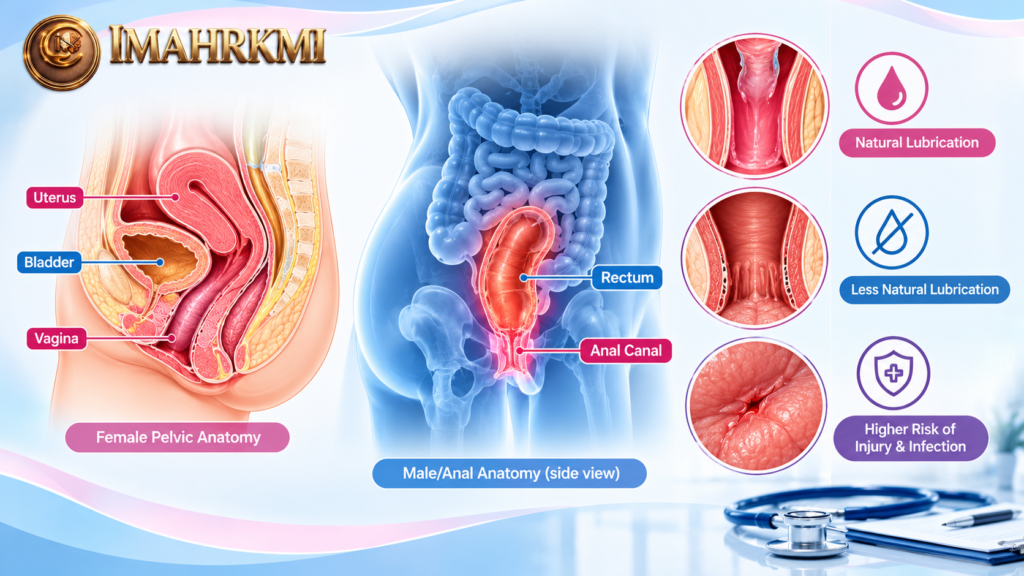
Anal sex, also called anal intercourse when penetration is involved, refers to sexual activity involving the anus.
The anus and rectum are anatomically different from the vagina. They have different tissues, functions, lubrication characteristics, and susceptibility to injury.
These anatomical differences are medically important when discussing sexual health.
Unlike the vagina, the anus does not naturally provide the same type of sexual lubrication. The tissues of the anal canal can also be susceptible to trauma.
For these reasons, medical discussions of anal sexual activity require particular attention to infection prevention, tissue injury, pain, and other health considerations.
Why Are People Searching for Information About Anal Sex?
People may search for information about anal sex for very different reasons.
A married woman may be asking:
- Is anal sex medically safe?
- Why is my husband interested in it?
- What if I am uncomfortable with it?
- Can I refuse?
- Could it cause injury?
- Could it cause an infection?
- What does Islam say about it?
A husband may ask:
- Why does my wife refuse?
- Is anal sex harmful?
- What are the medical risks?
- How should spouses discuss sexual boundaries?
- What does Islamic scholarship say?
Healthcare professionals may have different questions, such as:
- What health risks should patients understand?
- Which sexually transmitted infections can be transmitted?
- What symptoms require medical evaluation?
- How should sensitive sexual-health questions be discussed professionally?
These different questions demonstrate why sexual health education should address the medical, psychological, relational, and ethical dimensions of sexuality.
Medical Risks of Anal Sex
Anal sex can involve several medical risks, and understanding them is important for anyone studying sexual health.
1. Sexually Transmitted Infections
One of the most significant medical concerns is the transmission of sexually transmitted infections (STIs).
Depending on the infection and circumstances, anal sexual contact can transmit infections such as:
- HIV
- Gonorrhea
- Chlamydia
- Syphilis
- Herpes
- Human papillomavirus (HPV)
- Hepatitis B and other infections
The CDC identifies anal sex as a sexual activity associated with STI transmission, and HIV transmission risk is particularly significant with anal intercourse compared with many other sexual activities.
This makes sexual health education and appropriate STI prevention particularly important.
Why Is HIV Risk Important?
Anal intercourse can carry a higher risk of HIV transmission than vaginal intercourse.
The rectal lining is relatively thin and can be susceptible to microscopic injury, creating opportunities for infection transmission when HIV is present.
Risk varies according to circumstances, including whether a partner has HIV, whether HIV treatment has suppressed the viral load, and whether appropriate prevention measures are used.
Modern HIV treatment has dramatically changed HIV prevention and management. A person living with HIV who maintains an undetectable viral load does not sexually transmit HIV according to the established U=U (Undetectable = Untransmittable) principle.
This is an example of why modern sexual health education should be based on current medical evidence rather than fear or outdated information.
Anal Sex and Other STIs
HIV is not the only infection that matters.
Anal sexual contact can also be associated with transmission of:
Gonorrhea
Gonorrhea can infect the rectum and may produce symptoms such as discharge, discomfort, itching, or pain. However, some infections may cause few or no symptoms.
Chlamydia
Rectal chlamydia can occur following exposure and may sometimes be asymptomatic.
Syphilis
Syphilis can be transmitted through sexual contact with infectious lesions.
Herpes
Herpes can be transmitted through contact with infected skin or lesions, including when visible symptoms are absent.
HPV
Human papillomavirus can affect the genital and anal regions and is associated with certain cancers.
These infections demonstrate why STI testing and professional medical advice may be appropriate for people with relevant exposure or symptoms.
Physical Injury and Pain
Another important concern is physical injury.
The tissues around the anus can be injured, particularly when there is excessive force, insufficient preparation, or other circumstances that increase friction or trauma.
Possible problems can include:
- Pain
- Bleeding
- Tears or fissures
- Local irritation
- Inflammation
- Exacerbation of existing anorectal conditions
Severe or persistent pain or bleeding should not be ignored.
A healthcare professional can determine whether the symptoms are related to a minor injury, hemorrhoids, fissures, infection, or another medical condition.
Anal Sex and Hemorrhoids
People with hemorrhoids or other anorectal problems may have additional concerns.
Hemorrhoids involve swollen or enlarged blood vessels in the anal region and can cause:
- Pain
- Itching
- Irritation
- Bleeding
- A sensation of swelling or a lump
Sexual activity that causes pressure or trauma to an already irritated area may worsen symptoms.
Anyone experiencing unexplained rectal bleeding, persistent pain, or other concerning symptoms should seek appropriate medical evaluation rather than assuming the symptoms are simply caused by sexual activity.
Anal Sex and Hygiene
Hygiene is another subject frequently discussed in relation to anal sex.
The rectum is part of the gastrointestinal tract, meaning bacteria naturally present in the digestive system can be present in the area.
This creates considerations that are different from other forms of sexual contact.
Sexual health education should therefore explain the relationship between:
- Gastrointestinal bacteria
- Genital health
- Infection prevention
- Hygiene
- Cross-contamination
- STI prevention
The objective of education should be to understand health risks rather than to encourage a particular sexual behavior.
Can Anal Sex Affect Sexual Health?
The answer depends on the individual and circumstances.
Some people may experience no immediate medical complication, while others may experience pain, injury, infection, or psychological distress.
Existing health conditions can also affect risk.
For example, individuals with certain anorectal disorders, active infections, unexplained bleeding, or significant pain may require medical assessment.
This is why generalized statements such as “anal sex is always safe” or “anal sex always causes permanent damage” are both medically inappropriate.
The correct approach is to understand individual risk factors and evidence-based medical information.
Psychological and Emotional Considerations
Sexual health is not limited to anatomy.
Psychological factors can strongly influence a person’s experience of sexual intimacy.
A spouse may experience:
- Anxiety
- Fear
- Shame
- Pressure
- Religious conflict
- Relationship stress
- Body-image concerns
- Previous negative experiences
- Difficulty communicating boundaries
If one partner feels pressured into a sexual activity, the issue becomes a relationship and consent concern rather than simply a question of sexual technique.
Consent in Marriage
Marriage does not eliminate the importance of consent.
A healthy marriage should allow both spouses to communicate their comfort levels and boundaries.
One partner may want a particular sexual activity while the other partner does not.
A respectful response should involve communication rather than coercion.
Pressure may include:
- Threats
- Emotional blackmail
- Repeated demands
- Humiliation
- Manipulation
- Religious guilt
- Comparisons with other couples
- Using pornography to pressure a spouse
Sexual intimacy should not become a source of fear or coercion.
What Does Islam Say About Anal Sex in Marriage?
For Muslim readers, this is an especially important question.
The Islamic position regarding anal intercourse is substantially different from questions surrounding many other forms of marital intimacy.
Classical Islamic scholarship has discussed the subject extensively, and the mainstream Sunni legal position considers anal intercourse prohibited.
The prohibition is discussed in relation to Qur’anic interpretation and, more directly, Prophetic traditions concerning intercourse through the anus.
Because this is a religious matter, Muslims should distinguish between:
- Qur’anic teachings
- Authentic Hadith
- Classical jurisprudence
- Scholarly interpretation
- Contemporary discussions
- Cultural assumptions
A serious Islamic sex-education program should not simply copy an anonymous internet statement and present it as scholarship.
Instead, students should learn how Islamic principles and authentic sources are used to understand questions concerning marital intimacy.
Why Islamic Sexual Education Matters
Islam does not treat marriage and sexuality as subjects that should be understood only through cultural taboos.
Islamic teachings address marriage, modesty, family life, purification, rights, responsibilities, and ethical conduct.
At the same time, medical science addresses different questions:
- Anatomy
- Physiology
- Infection
- Sexual dysfunction
- Mental health
- Sexual pain
- Reproductive health
- Disease prevention
For Muslim healthcare professionals and educators, understanding both dimensions can be particularly valuable.
A medical professional should know the medical evidence.
A person seeking a religious ruling should understand the relevant Islamic sources and consult qualified scholarship when necessary.
These areas can be studied together educationally without confusing medical evidence with religious authority.
Anal Sex and Marital Conflict
Sometimes the question is not really about anal sex.
The underlying problem may be a disagreement between spouses about sexual preferences.
For example:
One spouse wants something the other spouse does not want.
If the couple focuses only on the sexual act, they may miss the underlying issue.
The real problem could involve:
- Communication
- Sexual desire differences
- Lack of emotional connection
- Pornography
- Unrealistic expectations
- Religious beliefs
- Anxiety
- Previous experiences
- Relationship dissatisfaction
Professional relationship and sexual-health education can help identify these underlying factors.
Common Questions About Anal Sex
Is anal sex medically risk-free?
No. It can involve STI transmission, including HIV, and can also involve physical injury and other health concerns.
Can anal sex transmit HIV?
Yes. Anal intercourse can carry a significant risk of HIV transmission when one partner has transmissible HIV.
Can anal sex transmit other STIs?
Yes. Multiple STIs can be transmitted through anal sexual contact.
Can anal sex cause bleeding?
Injury to anal or rectal tissue can cause bleeding. Persistent or significant bleeding should receive medical evaluation.
Can anal sex cause pain?
Yes. Pain can occur for several reasons, including tissue irritation, injury, infection, or underlying medical conditions.
Is anal sex permitted in Islam?
Mainstream Islamic jurisprudence considers anal intercourse prohibited. Specific religious questions should be discussed with a qualified Islamic scholar who can explain the relevant Qur’anic and Hadith evidence and jurisprudential framework.
Can a spouse be forced to have anal sex?
No. Sexual coercion is not an appropriate foundation for a healthy marriage.
Should married couples discuss sexual health?
Yes. Respectful communication can help couples understand health concerns, boundaries, expectations, and differences in sexual desire.
Why Professional Sex Education Is Important
Searching Google for a sexual-health question may produce thousands of pages, but quantity does not equal quality.
A reader may encounter:
- Medical websites
- Religious websites
- Personal blogs
- Social media posts
- Pornographic material
- Anecdotal experiences
- Misinformation
- Outdated medical claims
A structured educational course can provide a more organized way to study sexual health.
Rather than learning isolated answers to isolated questions, students can develop a broader understanding of human sexuality.
Study Sexual Health From Medical, Psychological, and Islamic Perspectives
If you have questions about anal sex, oral sex, marital intimacy, female sexual health, sexual desire, sexual dysfunction, relationship concerns, or the intersection of sexuality and Islamic values, a single internet article cannot provide comprehensive education.
The IMAHRKMI Clinical Sex Education Course is designed to provide structured education in human sexuality and sexual health.
The program approaches sensitive sexual-health subjects through a professional educational framework involving medical science, psychology, clinical understanding, relationship dynamics, and relevant Islamic perspectives.
Students can explore broader subjects such as:
- Human sexuality
- Sexual health
- Female sexual health
- Male sexual health
- Sexual desire
- Sexual arousal
- Sexual dysfunction
- Sexual pain
- Vaginismus
- Relationship and couple dynamics
- Sexual communication
- Psychological factors affecting intimacy
- STI awareness
- Sexual-health assessment
- Cultural considerations
- Islamic perspectives on marital intimacy
- Qur’an and authentic Hadith in relevant educational discussions
- Professional and ethical considerations
The purpose is not to encourage a particular sexual behavior.
The purpose is to educate, inform, and develop a responsible understanding of sexual health and human relationships.
Who Should Consider Clinical Sex Education?
A structured course may be particularly useful for:
- Physicians
- Healthcare professionals
- Medical students
- Mental health professionals
- Counselors
- Relationship professionals
- Sexual-health educators
- Professionals working with married couples
- Individuals seeking a deeper understanding of human sexuality
For professionals, sexual-health education can also improve their ability to recognize when a sexual concern may have medical, psychological, or relationship causes.
When Should Someone Seek Medical Help?
Sexual-health questions sometimes require a healthcare professional rather than an internet article.
Medical evaluation may be appropriate when someone experiences:
- Persistent rectal pain
- Significant or recurrent bleeding
- Unexplained sores
- Discharge
- Fever
- Persistent itching or inflammation
- Possible STI exposure
- Symptoms that do not resolve
- Significant anxiety about sexual health
People should avoid self-diagnosing potentially serious symptoms based solely on online information.
Final Thoughts
Anal sex in marriage is a subject that should be approached with medical accuracy, psychological awareness, respect for marital boundaries, and appropriate Islamic knowledge.
From a medical perspective, anal intercourse can involve important health risks, particularly sexually transmitted infections and physical injury. HIV transmission risk is an especially important consideration.
From a psychological and relationship perspective, couples should consider communication, emotional safety, mutual respect, and consent.
From an Islamic perspective, mainstream Islamic jurisprudence prohibits anal intercourse, and Muslims who want to understand the religious basis should study the relevant Qur’anic interpretation, authentic Hadith, and scholarly jurisprudence rather than relying on social-media claims.
Most importantly, one online article cannot answer every question about sexual health.
If you want to understand sexuality comprehensively—including medical science, psychology, marital relationships, female sexual health, sexual concerns, and relevant Islamic perspectives—structured sexual health education can provide a much stronger foundation.
Learn More Through the IMAHRKMI Clinical Sex Education Course
Do you have questions about anal sex, oral sex, marital intimacy, sexual health, female sexual concerns, sexual desire, or Islamic perspectives on sexuality?
Don’t depend entirely on random internet searches.
Enroll in the IMAHRKMI Clinical Sex Education Course and study sexual health and human sexuality through a structured medical, psychological, clinical, relationship, and Islamic educational framework.
Learn. Understand. Communicate. Develop responsible sexual-health knowledge.
About the Author
Dr. Inayat Ullah, M.D.
Board-Certified Psychiatrist
AASECT-Certified Sex Therapist
Sexologist & Mental Health Specialist
Relationship & Couple Therapy Specialist
Director, IMAHRKMI
New York, USA