
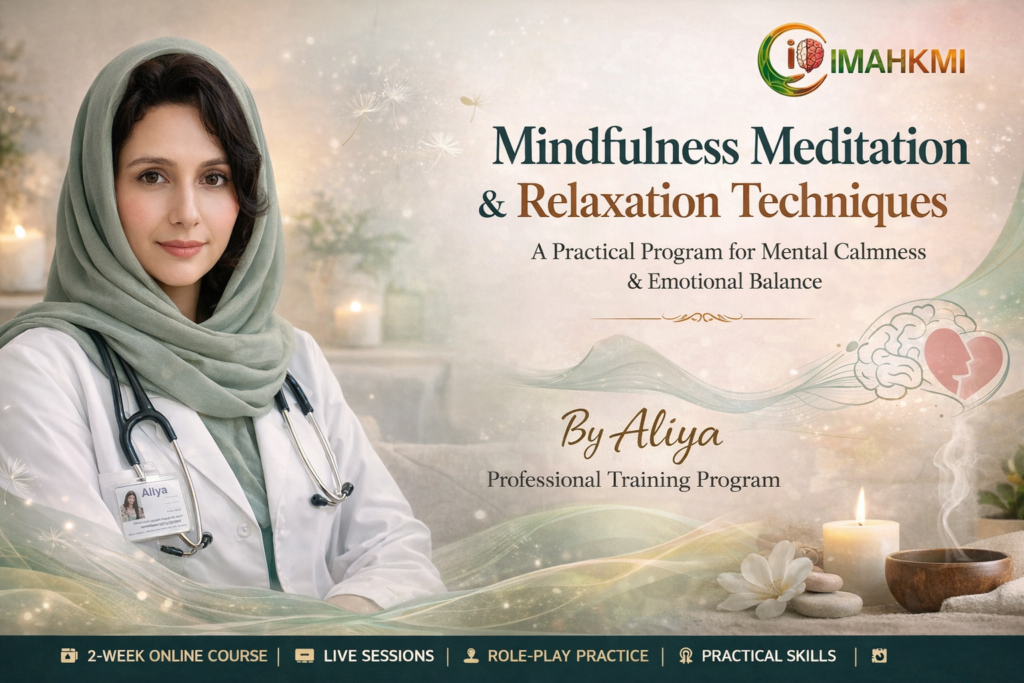
Mindfulness Meditation & Relaxation Techniques: A Practical Program for Mental Calmness and Emotional Balance
Modern life often moves at an exhausting pace. Daily responsibilities, work pressure, social expectations, and constant exposure to information can place significant strain on the mind. Many people find themselves feeling mentally tired, emotionally overwhelmed, and physically tense. Worry, overthinking, poor sleep, difficulty concentrating, and a constant sense of stress have become common experiences.
Although people often search for quick ways to feel better, temporary solutions rarely address the deeper problem. Lasting emotional well-being depends on learning how to calm the mind, regulate the body, and respond to stress in a healthier way.
Mindfulness meditation and relaxation techniques provide effective methods for achieving this balance. These practices are supported by psychological and scientific research and are widely used to reduce stress, improve focus, strengthen emotional control, and create a greater sense of inner peace.
The Mindfulness Meditation & Relaxation Techniques training program is designed as a structured two-week online course. It offers simple yet powerful tools that participants can use in daily life to improve concentration, manage anxiety, reduce tension, and build a more peaceful state of mind.
Understanding Mindfulness
Mindfulness is the ability to pay full attention to the present moment. Instead of becoming trapped in worries about the future or regrets about the past, mindfulness teaches individuals to notice what is happening right now.
This practice involves observing thoughts, emotions, and physical sensations without criticizing them or trying to push them away. The goal is not to stop thinking or eliminate emotions. Rather, mindfulness helps people become more aware of their inner experiences so they can respond with greater calmness and understanding.
Important elements of mindfulness include:
- Focusing on the present moment
- Becoming aware of thoughts and feelings
- Observing experiences without judgment
- Accepting emotions rather than resisting them
- Reducing impulsive reactions
When practiced regularly, mindfulness can break the cycle of overthinking and emotional overload. It teaches the mind to slow down and return to the present instead of becoming lost in endless worries.
What Is Meditation?
Meditation is a practice that trains the mind to become more focused, calm, and aware. It is one of the most effective ways to develop mindfulness.
During meditation, a person gently brings attention to a specific point of focus, such as breathing, body sensations, sounds, or calming images. Whenever the mind becomes distracted, attention is brought back again without frustration.
Many people believe meditation requires complete silence or an empty mind, but this is not true. Thoughts naturally appear during meditation. The practice is learning how to notice those thoughts without becoming carried away by them.
Several forms of meditation are included in this course:
- Breathing meditation
- Body scan meditation
- Guided imagery
- Mindfulness of thoughts and emotions
- Loving-kindness and self-compassion practices
Regular meditation can improve concentration, reduce stress, increase patience, and create a stronger sense of emotional balance.
Understanding Relaxation Techniques
Relaxation techniques are methods that help calm both the body and the mind. Stress affects the body in many ways. Muscles become tense, breathing becomes shallow, the heart beats faster, and the nervous system remains in a constant state of alertness.
Relaxation techniques work by activating the body’s natural calming response. This helps shift the body away from stress and toward a more peaceful state.
These techniques may help:
- Slow down breathing
- Reduce muscle tension
- Lower heart rate
- Decrease feelings of nervousness
- Improve sleep and physical comfort
When relaxation methods are combined with mindfulness, they become even more effective because they calm both physical tension and emotional distress at the same time.
The Connection Between Mind and Body
The mind and body constantly influence one another. Stressful thoughts can create physical discomfort, while physical tension can increase emotional distress.
For example, when a person feels anxious, they may notice:
- Tight shoulders
- Fast heartbeat
- Restlessness
- Difficulty breathing
- Trouble sleeping
Similarly, when the body begins to relax, the mind often becomes calmer as well.
Mindfulness and relaxation techniques support this mind-body connection by:
- Reducing the body’s stress response
- Improving awareness of physical sensations
- Creating slower and deeper breathing patterns
- Helping emotions feel more manageable
Learning to calm the body can often be the first step toward calming the mind.
Common Difficulties Addressed in This Program
This course is especially helpful for individuals who experience:
- Frequent stress and pressure
- Anxiety and excessive worrying
- Overthinking and racing thoughts
- Difficulty sleeping
- Poor concentration
- Emotional ups and downs
- Physical tension and fatigue
- Feeling mentally overwhelmed
These challenges are common in students, professionals, parents, and anyone facing a demanding lifestyle.
Main Principles of the Course
Awareness
The first step toward emotional balance is recognizing what is happening inside the mind and body. Participants learn to notice stress signals before they become overwhelming.
Acceptance
Rather than fighting thoughts or emotions, participants practice allowing them to exist without judgment. This creates a healthier relationship with difficult feelings.
Regulation
The course teaches practical skills for calming the nervous system, controlling breathing, and responding more thoughtfully.
Consistency
Mindfulness and relaxation become more effective through regular practice. Small daily habits often create the greatest long-term change.
Techniques Included in the Program
Mindful Breathing
Participants learn how to focus on the natural rhythm of breathing. Paying attention to each breath can quickly reduce tension and help the mind become more centered.
Benefits include:
- Greater calmness
- Reduced anxiety
- Improved concentration
Body Scan Meditation
This technique involves slowly bringing attention to different areas of the body. Participants notice where stress or tension is being held and learn how to release it.
Body scan meditation is especially helpful for:
- Physical tension
- Stress-related discomfort
- Improving body awareness
Progressive Muscle Relaxation
In this method, different muscle groups are gently tightened and then relaxed. This helps the body recognize the difference between tension and relaxation.
Progressive muscle relaxation is useful for:
- Reducing physical stress
- Easing headaches and body pain
- Preparing for restful sleep
Guided Visualization
Participants are guided to imagine calming scenes, peaceful environments, or comforting experiences. This can create a powerful sense of safety and relaxation.
Examples may include imagining:
- A quiet beach
- A peaceful garden
- A calm and comfortable room
Grounding Techniques
Grounding techniques help people return to the present moment when they feel anxious, panicked, or emotionally overwhelmed.
These exercises may include:
- Focusing on the senses
- Naming objects in the environment
- Feeling the body connected to the ground
Grounding is especially helpful during moments of strong anxiety.
Observing Thoughts
Participants learn how to watch thoughts come and go without reacting immediately. This helps reduce overthinking and prevents negative thoughts from taking control.
Instead of believing every thought automatically, participants learn to step back and simply notice what the mind is doing.
Relaxation for Better Sleep
Sleep problems are often connected to stress and an overactive mind. The course includes calming techniques that can be used before bedtime to improve sleep quality.
Participants learn:
- Evening relaxation routines
- Breathing exercises for sleep
- Ways to quiet racing thoughts at night
Two-Week Online Course Structure
Course Features
- Live online sessions through Zoom or Google Meet
- Recorded sessions when available
- Guided meditation exercises
- Daily practice activities
- Worksheets and reflection tasks
- WhatsApp support group for encouragement and discussion
Week One: Building Awareness and Calmness
Day 1: Introduction to Mindfulness
- Understanding what mindfulness means
- Learning how it improves mental well-being
Day 2: Stress and the Mind
- Understanding how stress affects thoughts and the body
- Recognizing common stress patterns
Day 3: Breathing Techniques
- Practicing slow and mindful breathing
- Learning how breathing influences emotions
Day 4: Body Awareness
- Introduction to body scan meditation
- Recognizing where tension is held
Day 5: Learning to Meditate
- Beginning a simple meditation practice
- Understanding how to handle distractions
Day 6: Progressive Muscle Relaxation
- Guided practice for releasing physical stress
- Learning how to relax the body deeply
Day 7: Review and Reflection
- Group discussion
- Questions and personal reflection
Week Two: Applying the Skills in Daily Life
Day 8: Deepening Mindfulness Practice
- Strengthening awareness
- Learning how to manage difficult thoughts
Day 9: Grounding During Anxiety
- Practical strategies for staying calm during stressful moments
- Real-life grounding exercises
Day 10: Guided Imagery and Visualization
- Using mental imagery to create emotional calmness
- Practicing relaxation through imagination
Day 11: Emotional Regulation
- Learning the difference between reacting and responding
- Managing emotional triggers more effectively
Day 12: Sleep and Evening Relaxation
- Creating a healthy bedtime routine
- Improving sleep through mindfulness practices
Day 13: Building a Daily Routine
- Developing a personal mindfulness plan
- Integrating practice into everyday life
Day 14: Maintaining Progress
- Learning how to continue after the course ends
- Reflecting on personal growth and future goals
Benefits of the Program
Physical Benefits
- Less muscle tension
- Better sleep quality
- Lower physical stress
- Greater energy and relaxation
Mental Benefits
- Improved focus and concentration
- Reduced overthinking
- Greater mental clarity
- Better ability to handle pressure
Emotional Benefits
- Increased calmness
- More balanced emotions
- Greater self-awareness
- Stronger emotional resilience
Who Can Join?
This course is suitable for:
- Individuals experiencing stress or anxiety
- Students and professionals
- People who struggle with overthinking
- Individuals with sleep difficulties
- Anyone who wants more emotional balance and peace of mind
Expected Outcomes
By the end of the course, participants will:
- Understand the principles of mindfulness
- Learn practical meditation and relaxation methods
- Manage stress more effectively
- Improve emotional balance and focus
- Create a healthy daily self-care routine
- Feel more calm, clear, and in control
Conclusion
Mindfulness meditation and relaxation techniques are not simply temporary solutions for stress. They are valuable life skills that can improve mental health, emotional stability, and overall quality of life.
In a world filled with pressure and constant distraction, learning how to pause, breathe, and become fully present is more important than ever. Through regular practice, it becomes possible to create greater calmness, stronger focus, and a healthier relationship with both thoughts and emotions.
The Mindfulness Meditation & Relaxation Techniques program offers a practical and supportive path toward achieving that balance.