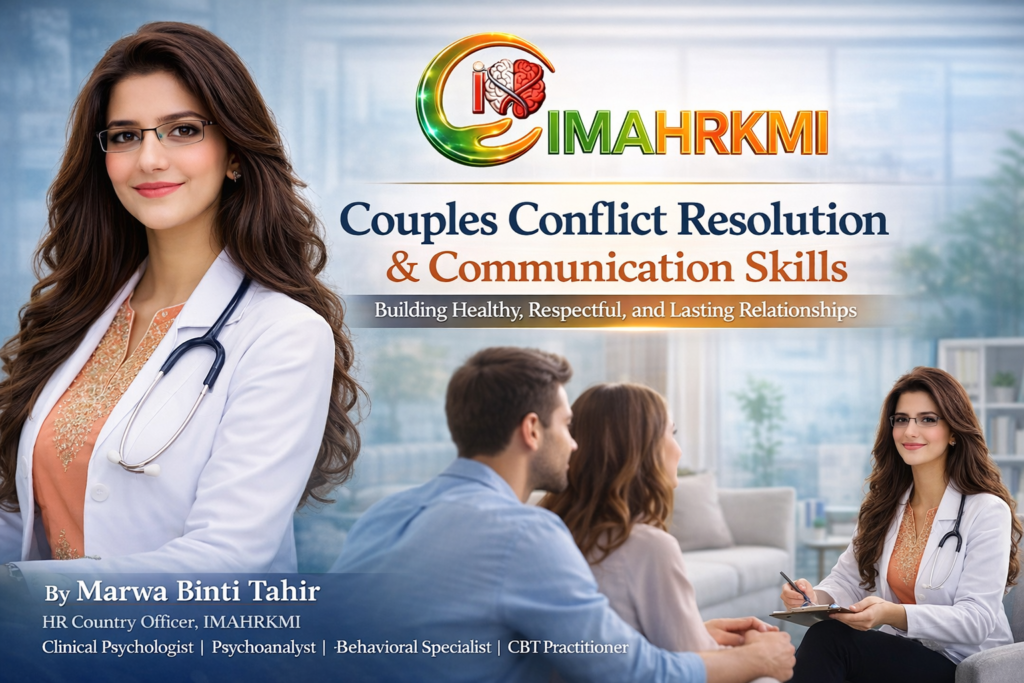
Couples Conflict Resolution & Communication Skills: Building Healthy, Respectful, and Lasting Relationships
Disagreements are a normal part of every close relationship. Two people may deeply care for one another and still experience tension because they think differently, communicate differently, or carry different expectations into the relationship. Conflict does not automatically destroy a partnership. In many cases, it becomes harmful only when it is handled with anger, silence, blame, or disrespect.
Many couples believe that their relationship problems exist because they no longer love one another. In reality, many relationships suffer because partners have never learned healthy ways to communicate, express emotions, or solve disagreements together. Repeated arguments, emotional distance, and feelings of frustration often develop when couples do not know how to discuss difficult topics safely and honestly.
The Couples Conflict Resolution & Communication Skills course has been designed to help couples and individuals build stronger, healthier relationships. The course provides practical tools, emotional insight, and step-by-step guidance that can improve communication, reduce tension, and strengthen emotional closeness.
Understanding Conflict in Relationships
Conflict appears whenever two partners have different ideas, needs, wishes, or reactions. These differences are not wrong; they are simply part of being two unique people sharing one relationship.
Relationship conflict commonly develops because of differences in:
- Personal needs and expectations
- Beliefs, values, and priorities
- Ways of communicating
- Emotional reactions and coping styles
- Family backgrounds and life experiences
Some of the most common reasons couples argue include:
- Misunderstandings or unclear communication
- Feeling ignored, unsupported, or emotionally disconnected
- Financial worries and daily stress
- Pressure from family, friends, or social expectations
- Jealousy, insecurity, or trust concerns
- Unresolved problems from the past
When these issues remain unresolved, they can gradually create bitterness, distance, and repeated cycles of unhealthy arguments.
Why Communication Matters
Communication is the heart of every successful relationship. It is not only about speaking; it is also about listening, understanding, and responding with care. Healthy communication allows both partners to feel safe, respected, and emotionally connected.
Strong communication includes:
- Listening carefully without interrupting
- Speaking honestly and respectfully
- Understanding both your own emotions and your partner’s feelings
- Responding calmly instead of reacting impulsively
- Clarifying misunderstandings instead of making assumptions
When communication becomes negative, small disagreements can quickly grow into major conflicts. Criticism, sarcasm, blame, silent treatment, and avoidance often make problems worse rather than better.
Common Communication Mistakes Between Couples
Many couples unintentionally fall into unhealthy communication habits. These patterns often repeat over time and can damage the relationship if they are not recognized.
Some of the most common mistakes include:
- Interrupting while the other person is speaking
- Listening only to reply instead of listening to understand
- Using harsh words, blame, or criticism
- Bringing old arguments into every new discussion
- Ignoring problems instead of talking about them
- Expecting a partner to “just know” what is wrong
- Responding with anger before understanding the situation
- Becoming defensive instead of accepting responsibility
The first step toward change is learning to identify these patterns and replace them with healthier responses.
Core Principles of Healthy Conflict Resolution
- Respect Comes First
A relationship cannot grow if one partner feels dismissed or unimportant. Even during disagreement, both people deserve to be treated with kindness and dignity.
- Manage Emotions Before Speaking
Strong emotions can lead to hurtful words and impulsive reactions. Learning to pause, breathe, and calm down before responding helps prevent unnecessary damage.
- Focus on Solving the Problem
The goal of an argument should not be to prove who is right. The real goal is to understand the problem and work together toward a solution.
- Speak Honestly and Clearly
Healthy relationships require open communication. Partners need to express their thoughts, needs, and feelings directly rather than expecting the other person to guess.
- Accept Personal Responsibility
Every conflict usually involves both partners in some way. Taking responsibility for your own words, actions, and mistakes is essential for healing and growth.
Essential Skills Taught in This Course
Active Listening
Participants learn how to truly listen to their partner without interrupting or becoming defensive. Active listening involves paying attention, showing empathy, and reflecting back what the other person is saying.
Participants will practice:
- Listening with patience and attention
- Understanding the feelings behind the words
- Asking helpful questions for clarity
- Showing empathy and emotional support
Assertive Communication
Assertive communication means expressing needs and feelings honestly without becoming aggressive or passive. It allows partners to speak with confidence while still remaining respectful.
Participants will learn how to:
- Speak clearly and calmly
- Ask for what they need without guilt
- Use respectful language during difficult conversations
- Share concerns without blaming or attacking
Emotional Awareness
Many arguments begin because people react without understanding their emotions. This course helps participants recognize their personal triggers, fears, and emotional patterns.
Topics include:
- Identifying feelings before reacting
- Recognizing stress, frustration, and insecurity
- Understanding a partner’s emotional experience
- Learning healthier emotional responses
Techniques for De-escalating Conflict
When emotions become intense, couples often need practical ways to calm the situation before it becomes worse.
Participants will learn:
- How to pause a conversation safely
- When to take a break and return later
- How to lower emotional intensity
- Ways to use a calm tone and respectful words
Problem-Solving as a Team
Instead of fighting against each other, couples learn how to work together against the problem.
This section teaches:
- How to identify the real issue
- Ways to brainstorm possible solutions
- Decision-making as a couple
- Creating fair and realistic agreements
Rebuilding Emotional Connection
Healthy communication is not only about reducing conflict. It is also about creating greater closeness, trust, and appreciation.
Participants explore ways to:
- Express gratitude and affection
- Spend meaningful time together
- Rebuild trust after difficult experiences
- Strengthen emotional intimacy
Two-Week Online Course Structure
The course is delivered through live online sessions and interactive activities. Participants receive practical exercises that can be used immediately within their relationships.
Course Features
- Live classes through Google Meet or Zoom
- Recorded sessions when available
- Worksheets and guided exercises
- Role-play and communication practice
- WhatsApp support group for ongoing guidance
Week One: Understanding Conflict and Communication
Day 1 – Understanding Relationship Patterns
Participants explore how relationships develop and why certain patterns continue over time. Common relationship struggles and conflict cycles are discussed.
Day 2 – Communication Fundamentals
This session focuses on verbal and non-verbal communication. Participants learn how body language, tone, silence, and words affect relationships.
Day 3 – Recognizing Unhealthy Patterns
Participants learn to identify criticism, defensiveness, blame, withdrawal, and emotional triggers that create repeated arguments.
Day 4 – Learning Active Listening
This day includes listening exercises, empathy-building activities, and practice in understanding a partner’s point of view.
Day 5 – Emotional Awareness and Self-Control
Participants explore how emotions influence communication and learn practical strategies for managing anger, sadness, frustration, and anxiety.
Day 6 – Expressing Needs in a Healthy Way
The focus is on learning how to communicate needs respectfully through assertiveness and “I feel” statements.
Day 7 – Weekly Reflection and Review
Participants review the week’s learning, ask questions, and reflect on the changes they have already noticed.
Week Two: Conflict Resolution and Relationship Growth
Day 8 – Step-by-Step Conflict Resolution
Participants are introduced to a clear process for solving disagreements in a calm and constructive way.
Day 9 – Managing Anger and Intense Emotions
This session provides emotional regulation techniques that help couples remain calm during stressful situations.
Day 10 – Building Problem-Solving Skills
Couples learn how to make decisions together, handle differences fairly, and reach healthy compromises.
Day 11 – Rebuilding Trust After Conflict
Participants explore forgiveness, healing from past hurt, and rebuilding emotional safety within the relationship.
Day 12 – Strengthening Emotional Closeness
This session focuses on appreciation, affection, emotional support, and understanding each partner’s emotional needs.
Day 13 – Creating Healthy Boundaries
Participants learn the importance of personal space, mutual respect, and setting healthy limits within a relationship.
Day 14 – Maintaining a Strong Relationship
The final session teaches long-term communication habits that help couples continue growing together after the course ends.
Benefits of the Course
Relationship Benefits
- Fewer arguments and misunderstandings
- Better communication between partners
- Increased trust and emotional closeness
- More respectful and supportive interactions
Emotional Benefits
- Improved emotional control
- Greater patience and empathy
- Reduced anger, resentment, and frustration
- Increased confidence during difficult conversations
Personal Development Benefits
- Stronger self-awareness
- Better understanding of relationship patterns
- Improved problem-solving and communication skills
- Greater ability to manage conflict in all areas of life
Who Can Join?
This course is suitable for:
- Married couples
- Engaged couples
- Partners in committed relationships
- Individuals preparing for marriage
- Anyone experiencing repeated relationship conflicts
- People who want to improve communication and emotional connection
Expected Results
By the end of the course, participants are expected to:
- Communicate with greater honesty and confidence
- Understand their partner more clearly
- Handle disagreements in a calm and respectful manner
- Build a stronger, healthier, and more stable relationship
- Feel more emotionally connected and supported
Certificate of Completion
Participants who successfully complete the program will receive an official Certificate of Completion from IMARHKMI.
Conclusion
A healthy relationship does not depend on the absence of conflict. Every couple experiences differences and disagreements at times. What truly matters is how those moments are handled.
When couples learn to listen, communicate, and solve problems together, conflict becomes an opportunity for growth rather than a reason for distance. The Couples Conflict Resolution & Communication Skills course offers the knowledge, support, and practical tools needed to create a relationship built on trust, respect, understanding, and lasting emotional connection.