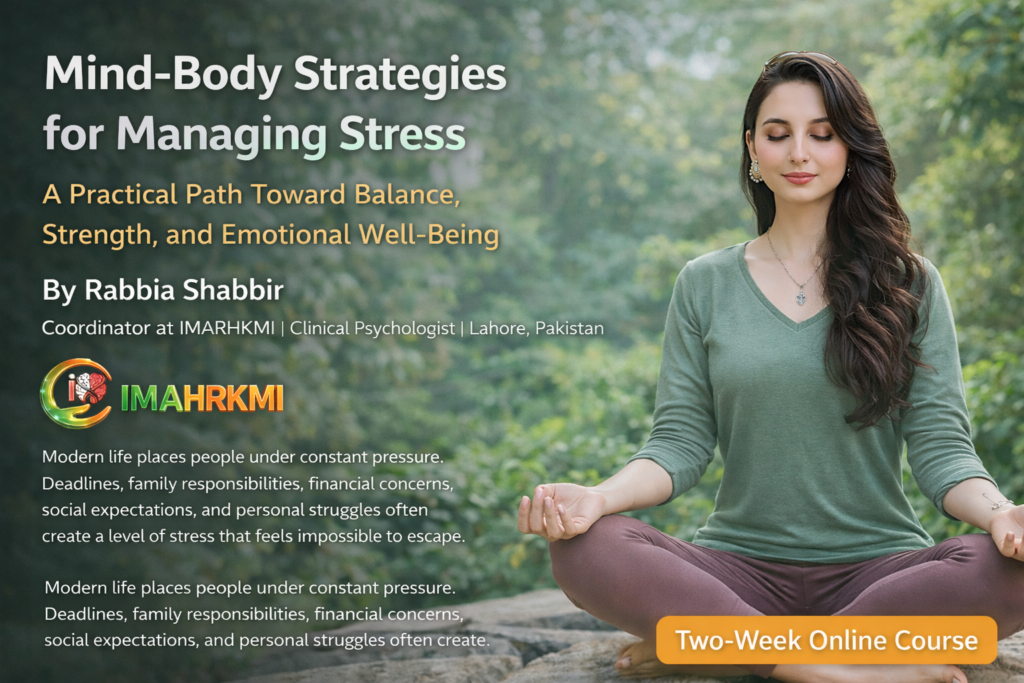
Mind-Body Strategies for Managing Stress: A Practical Path Toward Balance, Strength, and Emotional Well-Being
Modern life places people under constant pressure. Deadlines, family responsibilities, financial concerns, social expectations, and personal struggles often create a level of stress that feels impossible to escape. For many individuals, stress is no longer an occasional reaction to difficult situations; it has become a daily experience.
Although stress is a natural part of life, long-term stress can gradually affect every area of functioning. It influences thoughts, emotions, sleep, energy, physical health, relationships, and productivity. Many people try to control stress by changing their environment, avoiding difficult situations, or working harder. However, one of the most effective ways to manage stress begins from within—through strengthening the connection between the mind and the body.
Mind-body techniques are practical methods that help individuals understand how their thoughts, emotions, and physical reactions influence one another. These techniques are simple, evidence-based, and can be practiced by anyone. With regular use, they help reduce tension, improve emotional control, and build greater resilience.
This article explains the role of the mind-body connection in stress management and presents a structured two-week online course designed to help participants learn these techniques in a supportive and practical way.
Understanding Stress from a Mind-Body Perspective
Stress is often described as an emotional experience, but in reality, it involves the entire body. Whenever the brain detects a challenge or threat, it automatically activates the body’s survival system, commonly known as the “fight-or-flight” response.
During this response, the body releases hormones such as cortisol and adrenaline. These hormones prepare the body to react quickly. Heart rate increases, breathing becomes faster, muscles tighten, and attention becomes focused on the perceived danger.
This response can be useful during emergencies. However, when stress continues for weeks or months, the body remains in a constant state of tension. Over time, this can lead to exhaustion and emotional overload.
Common signs of stress include:
- Persistent muscle tension
- Frequent headaches
- Difficulty sleeping
- Tiredness and low energy
- Rapid heartbeat
- Irritability and emotional sensitivity
- Difficulty concentrating
- Overthinking and constant worry
- Changes in appetite
- Feeling overwhelmed
When stress is left unmanaged, it can contribute to more serious difficulties such as anxiety, depression, high blood pressure, digestive problems, lowered immunity, and burnout.
The Powerful Relationship Between Mind and Body
The mind and body remain closely connected, continuously influencing and responding to one another.
Thoughts influence physical reactions, and physical states influence emotions and behavior.
For example, a person who repeatedly thinks, “I cannot handle this,” may notice their heart racing, shoulders tightening, and breathing becoming shallow. On the other hand, when the body is relaxed through slow breathing or gentle movement, the mind often becomes calmer and clearer.
This relationship explains why mind-body techniques are so effective. Instead of focusing only on thoughts or only on physical symptoms, these methods address both at the same time.
When practiced regularly, mind-body techniques can:
- Calm the nervous system
- Lower physical tension
- Improve emotional stability
- Increase self-awareness
- Help individuals respond to stress in a healthier way
Core Principles of Mind-Body Stress Management
Successful stress management depends on more than temporary relief. Individuals need skills that help them recognize stress early, regulate their reactions, and create healthier patterns.
- Awareness
The first step is learning to notice stress signals in the body and mind. Many people ignore their stress until it becomes overwhelming. Awareness helps individuals identify early warning signs such as tight muscles, racing thoughts, or emotional irritability.
- Regulation
Once stress signals are recognized, the next step is learning how to control the body’s reaction. Regulation techniques slow the heart rate, reduce muscle tension, and create a sense of emotional balance.
- Relaxation
The body has a natural calming system known as the parasympathetic nervous system. Mind-body practices activate this system and help the body shift from survival mode into a state of rest and recovery.
- Consistency
Stress management works best when techniques are practiced regularly. Small daily habits often create greater long-term change than occasional intense efforts.
Practical Mind-Body Techniques for Stress Management
Deep Breathing
Deep breathing, also called diaphragmatic breathing, is one of the simplest and most effective ways to calm the body.
When people are stressed, their breathing often becomes fast and shallow. Deep breathing slows the nervous system and sends a message to the brain that the body is safe.
A simple breathing exercise includes:
- Sit comfortably and place one hand on the stomach.
- Slowly breathe in through the nose for four seconds.
- Hold the breath gently for one or two seconds.
- Exhale slowly through the mouth for six seconds.
- Repeat for five to ten minutes.
Regular practice can reduce anxiety, lower heart rate, and improve concentration.
Progressive Muscle Relaxation
Progressive Muscle Relaxation, often called PMR, involves tightening and then relaxing different muscle groups throughout the body.
Many individuals carry stress in their shoulders, neck, jaw, hands, or back without realizing it. PMR increases awareness of tension and teaches the body how relaxation feels.
The technique usually begins with the feet and gradually moves upward to the head. Each muscle group is gently tightened for a few seconds and then relaxed.
Benefits of PMR include:
- Reduced physical tension
- Improved sleep
- Better awareness of stress in the body
- Greater overall calmness
Mindfulness Meditation
Mindfulness involves focusing fully on the present experience while observing thoughts and feelings calmly, without criticizing or judging them.
Stress often grows when people become trapped in thoughts about the past or worries about the future. Mindfulness helps bring attention back to what is happening right now.
A basic mindfulness practice may involve focusing on the breath, noticing body sensations, or quietly observing thoughts without reacting to them.
With practice, mindfulness can help people:
- Reduce overthinking
- Improve emotional control
- Feel calmer during difficult situations
- Increase focus and mental clarity
Body Scan Exercise
The body scan is a guided awareness technique that encourages individuals to slowly notice sensations in different parts of the body.
During a body scan, attention is directed to areas such as the face, shoulders, chest, hands, stomach, and legs. The purpose is not to change anything immediately, but to notice where tension is present.
As awareness increases, the body often begins to relax naturally.
The body scan is especially helpful for people who feel disconnected from their physical sensations or who struggle with hidden stress.
Grounding Techniques
Grounding techniques are useful during moments of anxiety, panic, or emotional overwhelm. They help individuals reconnect with the present moment.
One effective method is the 5-4-3-2-1 grounding exercise:
- Notice 5 things you can see
- Notice 4 things you can touch
- Notice 3 things you can hear
- Notice 2 things you can smell
- Notice 1 thing you can taste
This technique shifts attention away from racing thoughts and brings the mind back to the environment.
Visualization and Guided Imagery
Visualization involves creating a calming mental image. Individuals may imagine a peaceful beach, a quiet garden, a mountain view, or any place where they feel safe and relaxed.
The brain often responds to positive mental images in a similar way to real experiences. As a result, visualization can reduce tension, improve mood, and create a sense of inner comfort.
Guided imagery is especially helpful before sleep, during periods of emotional distress, or when preparing for stressful situations.
Gentle Movement and Stretching
Stress does not only affect thoughts; it is also stored in the body. Gentle movement helps release this physical tension.
Stretching, light exercise, and simple yoga-based movements can improve flexibility, reduce muscle tightness, and increase energy.
Even five to ten minutes of movement each day can make a noticeable difference in emotional well-being.
Combining Breath with Positive Thoughts
Breathing exercises become even more effective when they are combined with calming statements.
For example:
- Inhale slowly while thinking, “I am calm.”
- Exhale slowly while thinking, “I am safe.”
These simple affirmations help replace fear and self-criticism with reassurance and emotional stability.
Two-Week Online Course: Mind-Body Techniques for Stress Management
To help individuals apply these skills in a practical and organized way, a two-week online course can be offered. The course is designed for students, professionals, parents, and anyone who wishes to manage stress more effectively.
Course Format
The course includes:
- Live online sessions through Zoom or Google Meet
- Recorded lectures for flexible learning
- Guided relaxation and breathing practices
- Daily reflection activities
- Worksheets and self-monitoring exercises
- WhatsApp support for questions and motivation
Week One: Building Awareness and Basic Skills
Day 1: Understanding Stress and the Mind-Body Connection
Participants learn how stress affects the brain and body, and why physical and emotional reactions are closely linked.
Day 2: Recognizing Personal Stress Signals
Participants identify their own emotional, physical, and behavioral signs of stress.
Day 3: Learning Deep Breathing Techniques
Practical breathing exercises are introduced, along with strategies for using them in daily life.
Day 4: Progressive Muscle Relaxation Practice
Participants are guided through a full PMR session to release tension and improve body awareness.
Day 5: Introduction to Mindfulness
This session teaches participants how to remain present and manage distracting thoughts.
Day 6: Body Scan and Relaxation Training
Participants practice noticing tension in the body and learn how to relax more effectively.
Day 7: Weekly Review and Reflection
The first week ends with discussion, feedback, questions, and a review of the techniques learned.
Week Two: Applying the Techniques in Daily Life
Day 8: Advanced Mindfulness and Emotional Regulation
Participants learn how to respond calmly to difficult thoughts and emotions.
Day 9: Grounding Techniques for Anxiety
Practical methods are taught for managing anxiety, panic, and emotional overwhelm in the moment.
Day 10: Visualization and Guided Imagery
Participants practice creating mental images that promote calmness and safety.
Day 11: Gentle Movement and Stress Release
Simple stretching and movement exercises are introduced to release stored tension.
Day 12: Creating a Personal Stress Management Toolkit
Participants combine the techniques they find most helpful and develop their own daily routine.
Day 13: Lifestyle Factors and Stress
The role of sleep, nutrition, time management, and healthy habits in stress reduction is discussed.
Day 14: Long-Term Resilience and Final Reflection
The course concludes with strategies for maintaining progress and continuing stress management after the program ends.
Benefits of the Course
Physical Benefits
- Lower muscle tension
- Improved sleep quality
- Reduced fatigue
- Better breathing and relaxation
- Lower heart rate and blood pressure
Mental Benefits
- Reduced stress and anxiety
- Improved concentration
- Better decision-making
- Greater emotional clarity
Emotional Benefits
- Increased calmness
- Greater self-confidence
- Improved mood stability
- Stronger resilience during difficult situations
Behavioral Benefits
- Healthier daily routines
- Improved productivity
- Better coping strategies
- Reduced emotional reactivity
Why This Course Can Be Effective
This course is designed to go beyond theory. Instead of simply discussing stress, it teaches practical techniques that participants can use immediately.
The course is effective because it:
- Focuses on real-life application
- Uses simple, evidence-based methods
- Encourages daily practice
- Provides support and accountability
- Helps participants build long-term habits
Who Can Benefit from This Program?
This course may be especially helpful for:
- Individuals experiencing ongoing stress
- Professionals facing burnout
- University and school students under pressure
- Parents managing multiple responsibilities
- Individuals struggling with anxiety or emotional exhaustion
- Anyone who wants greater balance and inner calm
Expected Outcomes
By the end of the course, participants are likely to:
- Understand their personal stress patterns
- Feel more in control of their physical and emotional reactions
- Use breathing and relaxation techniques confidently
- Build a healthy daily stress-management routine
- Experience improved emotional and physical well-being
- Develop stronger long-term resilience
Conclusion
Stress may be a part of life, but it does not have to control life. When individuals learn to understand the relationship between their thoughts, emotions, and physical reactions, they gain the ability to respond to stress in healthier and more effective ways.
Mind-body techniques are powerful because they are simple, natural, and accessible. They help people move from tension to calmness, from overwhelm to balance, and from emotional exhaustion to resilience.
The purpose of this course is not only to reduce stress for a short time, but to provide lasting skills that support mental health, emotional stability, and overall well-being for years to come.