
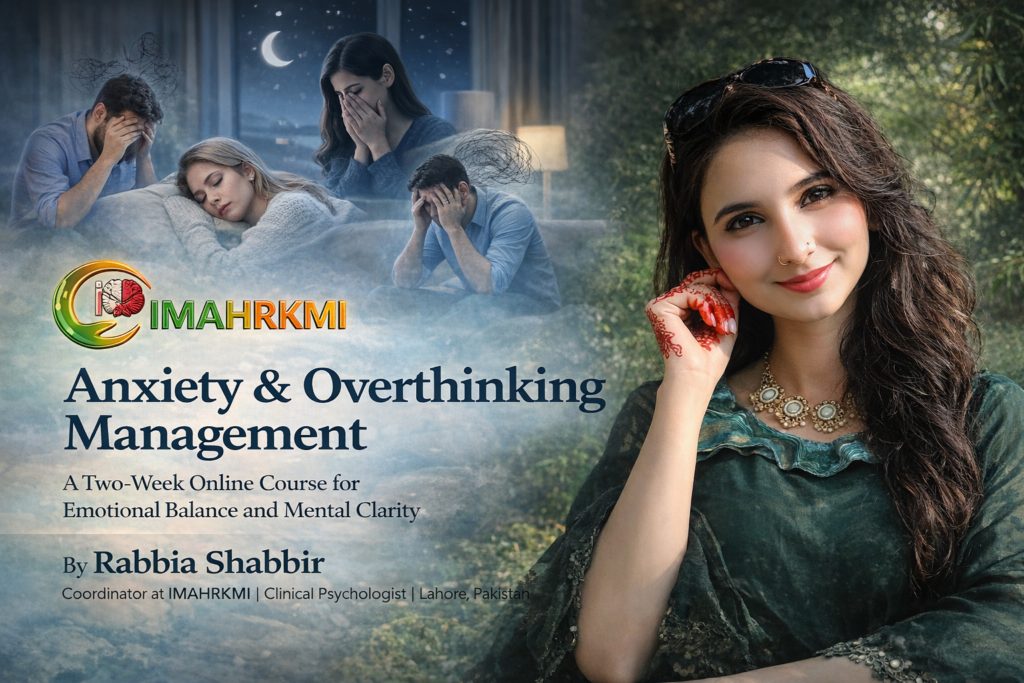
A Two-Week Online Course for Emotional Balance and Mental Clarity
Anxiety & Overthinking Management A Two-Week Online Course for Emotional Balance and Mental Clarity
Modern life often places people under constant pressure. Academic demands, work responsibilities, social expectations, and uncertainty about the future can leave the mind in a state of continuous worry. Although occasional stress is a natural part of life, persistent anxiety and overthinking can gradually affect sleep, concentration, confidence, relationships, and overall emotional health.
The online course Anxiety & Overthinking Management has been designed to help individuals understand why anxiety develops and how repetitive thinking patterns keep it active. Through a practical and supportive approach, participants learn how to calm the mind, manage difficult emotions, and create healthier ways of thinking.
This structured two-week program combines techniques from Cognitive Behavioral Therapy (CBT), mindfulness, emotional regulation, and modern psychological practice. Instead of only discussing theory, the course focuses on real-life strategies that participants can use in their daily routine.
Course Goals
By the conclusion of this program, participants will have developed the knowledge, skills, and confidence needed to better understand their thoughts, manage anxiety effectively, and respond to daily challenges with greater emotional balance.
- Recognize the habits and patterns behind overthinking. Identify unhelpful thoughts and replace them with balanced thinking
- Learn practical methods to manage emotional distress
- Improve concentration, confidence, and decision-making
- Build long-term emotional strength and resilience
Who Can Join This Course?
This course is suitable for anyone who feels mentally exhausted by constant worry or racing thoughts. It may be especially helpful for:
- Individuals who experience anxiety, stress, or excessive thinking
- Students who struggle with academic pressure and self-doubt
- Professionals dealing with burnout, mental fatigue, or difficult decisions
- People who find it hard to sleep because of continuous thoughts
- Anyone who wants greater emotional control and a clearer mind
How the Course is Delivered
The course is conducted completely online over two weeks and includes several learning methods to make the experience engaging and flexible.
Live Sessions
Participants attend interactive sessions through platforms such as Zoom or Google Meet. Each session lasts approximately 60 to 90 minutes and includes explanation, discussion, practical exercises, and question-answer opportunities.
Recorded Learning Material
All important lessons are also available in recorded form. This allows participants to revisit topics whenever they want and learn at their own pace.
Worksheets and Practice Activities
The course includes guided worksheets that help participants apply what they learn. These may include:
- Thought journals
- Daily reflection sheets
- Thought-challenging exercises
- Emotional awareness activities
WhatsApp Support Group
Participants are also added to a support group where they receive:
- Daily motivation and reminders
- Guidance from the instructor
- Support from other participants
- Help with assignments and questions
Assignments and Home Practice
Simple activities are given throughout the course so that participants can practice the techniques in their real life. These exercises help strengthen learning and create lasting change.
Two-Week Course Plan
Week One: Understanding Anxiety and Overthinking
The first week focuses on understanding what anxiety is, why overthinking happens, and how both are connected.
Day 1 – Understanding Anxiety
Participants learn what anxiety is, the different forms it can take, and how the body reacts during stress. The fight-or-flight response is explained in simple terms, along with signs that anxiety has become difficult to manage.
Day 2 – Understanding Overthinking
This session explores the difference between healthy thinking and harmful overthinking. Participants learn about worry, rumination, and why the mind often becomes trapped in repetitive thoughts.
Day 3 – The Cycle of Anxiety and Overthinking
Participants discover how anxious thoughts create emotional distress, which then leads to even more thinking and worry. They also learn how to identify the personal situations and triggers that start this cycle.
Day 4 – Thinking Errors and Cognitive Distortions
This session introduces common mental habits such as assuming the worst, self-criticism, perfectionism, and negative predictions. Participants learn how these patterns increase anxiety and how to recognize them in daily life.
Day 5 – Building Thought Awareness
Participants practice becoming more aware of their thoughts and emotions. Journaling and self-observation exercises are introduced to help them notice what they think, when they think it, and how it affects them.
Day 6 – Changing Negative Thinking
The focus shifts to learning how to challenge anxious thoughts and replace them with more realistic and balanced perspectives. Participants practice reframing negative beliefs through guided exercises.
Day 7 – Review and Reflection
The first week ends with a review session. Participants discuss what they have learned, ask questions, and complete practical exercises to strengthen their understanding.
Week Two: Building Practical Skills
The second week focuses on learning practical strategies that help participants manage anxiety in everyday situations.
Day 8 – Mindfulness and Staying Present
Participants are introduced to mindfulness and grounding exercises that help them bring their attention back to the present moment. Simple breathing practices are also taught to reduce stress.
Day 9 – Emotional Regulation Skills
This session teaches ways to manage strong emotions without becoming overwhelmed. Relaxation techniques and the connection between the body and emotions are explored.
Day 10 – Reducing the Habit of Overthinking
Participants learn practical methods to stop overthinking before it becomes overwhelming. They explore techniques such as setting limits on worry, creating mental boundaries, and redirecting attention.
Day 11 – Better Decision-Making
Many people with anxiety struggle to make decisions because they fear making mistakes. In this session, participants learn structured ways to make decisions, reduce perfectionism, and feel more confident.
Day 12 – Taking Action Instead of Avoiding
Avoidance often keeps anxiety active. Participants learn how to gradually take action, create healthy routines, increase motivation, and move forward even when they feel uncertain.
Day 13 – Self-Compassion and Positive Inner Dialogue
This session helps participants become kinder to themselves. They learn how self-criticism increases emotional pain and how a more supportive inner voice can improve confidence and healing.
Day 14 – Long-Term Growth and Course Closing
The final session focuses on maintaining progress after the course ends. Participants learn how to prevent setbacks, continue using the techniques, and build long-lasting emotional resilience.
Important Skills Participants Will Learn
Throughout the course, participants practice a wide range of useful strategies, including:
- CBT-based techniques for managing anxious thoughts
- Thought reframing and positive self-talk
- Mindfulness and grounding methods
- Deep breathing and relaxation exercises
- Journaling for emotional release and self-awareness
- Simple decision-making strategies
- Action-based techniques to reduce avoidance
Benefits of the Course
Emotional Benefits
- Greater calm and inner peace
- Increased confidence and self-control
- Improved emotional balance
Mental Benefits
- Less overthinking and mental clutter
- Clearer thinking and improved focus
- Better ability to handle difficult situations
Behavioral Benefits
- Reduced procrastination
- Improved daily routine and productivity
- More confidence in taking action
Social Benefits
- Better communication with others
- Healthier relationships
- Less fear in social situations
Why This Program Works
This course is effective because it is practical, organized, and focused on real change. Instead of offering only advice, it gives participants step-by-step methods that can be used immediately.
The program is successful because it:
- Follows a clear and easy-to-understand structure
- Uses proven psychological approaches
- Encourages active participation and regular practice
- Provides ongoing guidance and support
- Helps participants apply skills in everyday life
Expected Results
After completing the course, participants are likely to:
- Feel more in control of their thoughts
- Experience lower levels of anxiety and worry
- Think more clearly and make decisions with confidence
- Develop healthier ways of coping with stress
- Build long-term habits that support emotional well-being
Certificate of Completion
Participants who attend and complete the full course receive an official Certificate of Completion from IMARHKMI in recognition of their learning and participation.
Final Thoughts
Anxiety and overthinking can make life feel exhausting, but they do not have to control the future. With proper support, practical guidance, and consistent effort, it is possible to break free from unhealthy thought patterns and create a calmer, more balanced life.
This two-week online course offers more than information. It provides a path toward emotional strength, clearer thinking, and greater peace of mind.
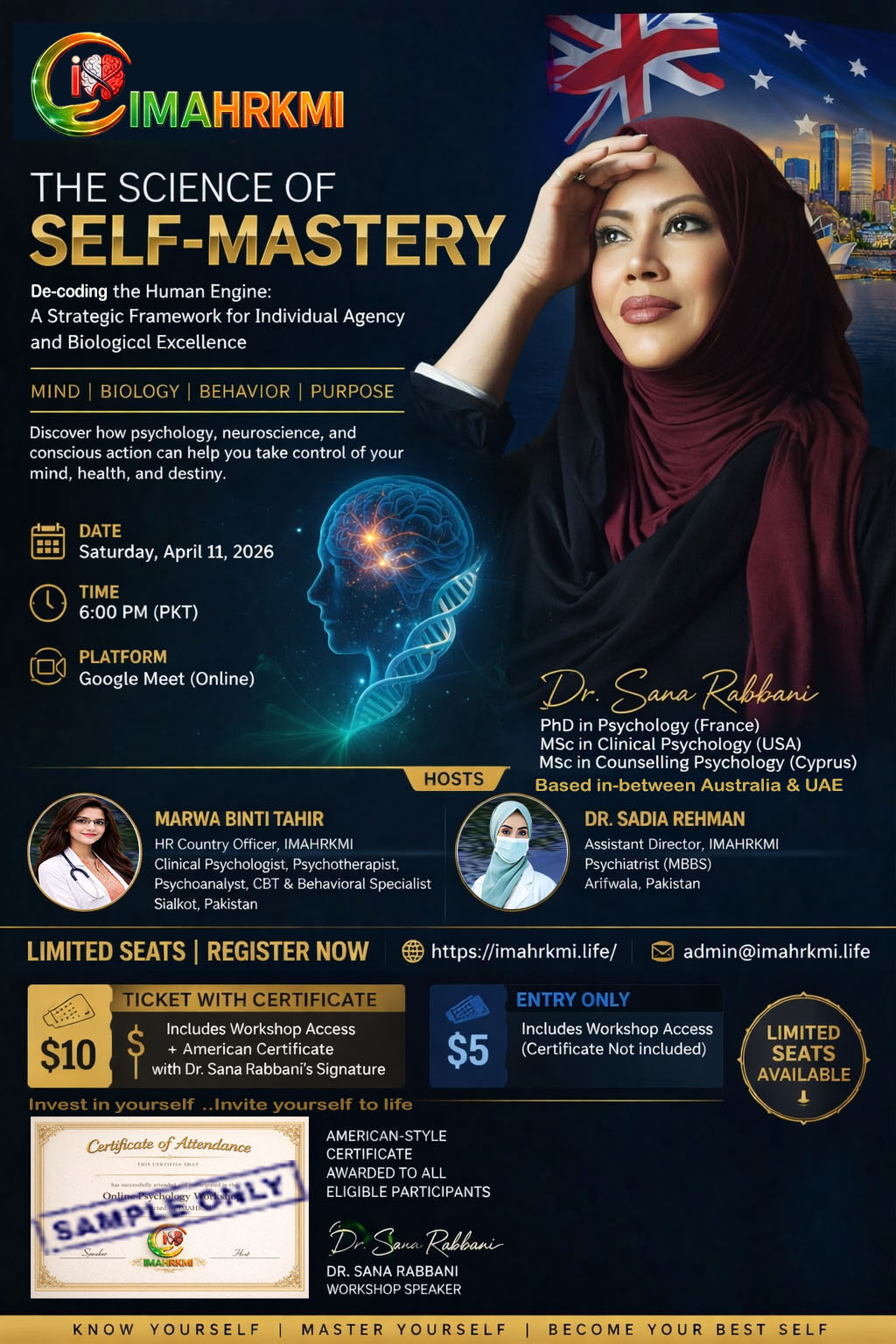
This in an outstanding course
This is an outstanding course