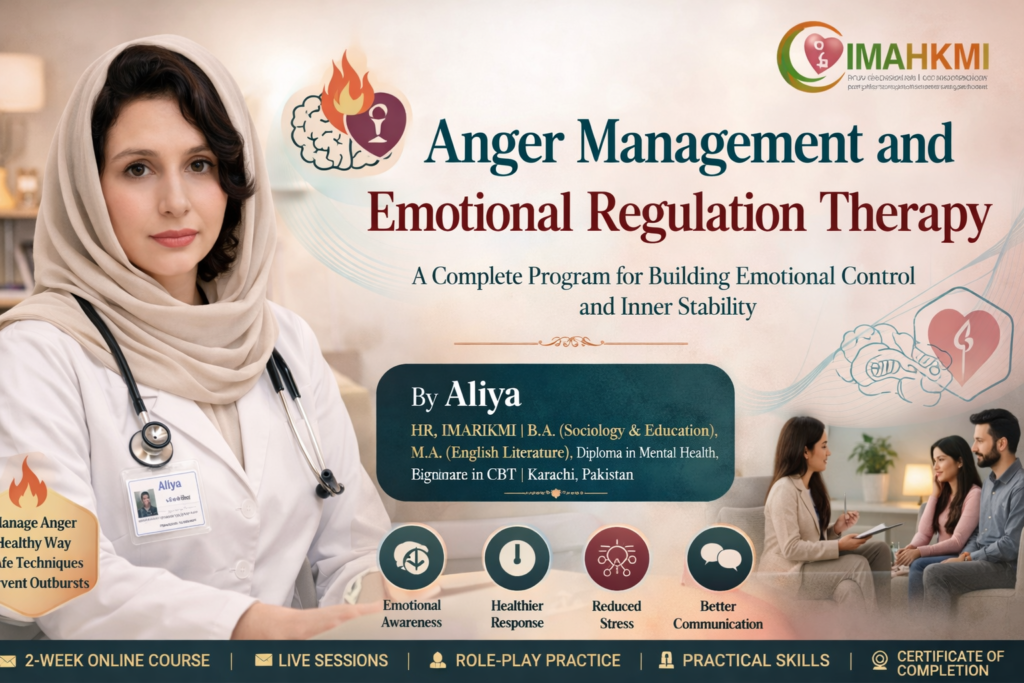
Anger Management and Emotional Regulation Therapy: A Complete Program for Building Emotional Control and Inner Stability
Human beings experience a wide range of emotions every day. These emotions influence thoughts, decisions, relationships, and behavior. Among all emotional experiences, anger is often one of the strongest and most difficult to manage. It may arise suddenly, feel overwhelming, and affect the way a person reacts to situations.
Anger itself is not harmful. It is a natural emotional response that may appear when a person feels hurt, ignored, threatened, disappointed, or treated unfairly. In some situations, anger can even be useful because it highlights important problems and motivates change. However, when anger is not understood or controlled, it can become damaging.
Some individuals express anger through shouting, aggression, harsh words, or impulsive actions. Others suppress their emotions and keep everything inside. Although these two patterns seem different, both can create emotional distress. Uncontrolled anger may damage relationships, while hidden anger can lead to sadness, anxiety, resentment, or long-term stress.
Because many people are never taught how to manage emotions in a healthy way, they may struggle to cope with frustration and conflict. Anger Management and Emotional Regulation Therapy is designed to change that. It helps individuals understand what they are feeling, recognize why those feelings appear, and learn healthier ways to respond.
This two-week online training program provides practical guidance, therapeutic strategies, and structured exercises that help participants develop emotional awareness, improve self-control, and create more balanced responses in everyday life.
Understanding Anger
Anger is an emotional reaction that usually appears when a person believes something is unfair, threatening, disappointing, or against their expectations. It is closely connected to the body’s natural stress response. When anger appears, the body may react quickly by increasing heart rate, tightening muscles, and preparing for action.
This response is linked to the “fight or flight” system. The brain interprets a situation as dangerous or upsetting and immediately sends signals throughout the body. For this reason, anger often feels intense and difficult to control.
From a psychological perspective, anger is not the true problem. The real challenge is the way anger is interpreted, managed, and expressed.
Anger can take two very different forms:
- Healthy anger, which encourages a person to solve a problem, protect personal boundaries, or communicate assertively
- Unhealthy anger, which leads to aggression, blame, emotional harm, conflict, or regret
Learning the difference between these two forms is one of the first steps toward emotional control.
Different Forms of Anger
Not everyone expresses anger in the same way. Some people show their feelings openly, while others hide them. Understanding personal patterns is important because it allows individuals to identify which habits need to change.
Passive Anger
Passive anger occurs when a person avoids expressing feelings directly. Instead of speaking honestly, they may remain silent, withdraw, become resentful, or express anger indirectly.
Examples include:
- Ignoring others
- Giving short or cold responses
- Holding grudges
- Avoiding difficult conversations
Although passive anger may appear calm on the surface, the emotions remain unresolved.
Aggressive Anger
Aggressive anger is expressed in an intense or harmful way. This may include shouting, insulting others, threatening behavior, breaking things, or physical aggression.
Aggressive reactions often happen impulsively and may later be followed by guilt or regret.
Assertive Anger
Assertive anger is the healthiest form of emotional expression. A person communicates what they feel without attacking, blaming, or remaining silent.
Assertive communication may include:
- Speaking calmly and honestly
- Explaining personal needs
- Setting clear boundaries
- Respecting both self and others
The purpose of therapy is not to remove anger completely. Instead, it helps individuals move from passive or aggressive reactions toward assertive and balanced expression.
What Is Emotional Regulation?
Emotional regulation is the ability to notice, understand, and manage emotions in a healthy way. It means learning how to respond thoughtfully rather than reacting automatically.
People with strong emotional regulation skills are not free from anger or sadness. Instead, they know how to recognize these emotions and choose an appropriate response.
Healthy emotional regulation includes:
- Recognizing personal triggers
- Understanding the connection between thoughts and feelings
- Becoming aware of physical changes in the body
- Pausing before reacting
- Making intentional choices
Without emotional regulation, people may react immediately based on emotion alone. This often leads to arguments, poor decisions, damaged relationships, or feelings of regret.
The Anger Cycle
Anger usually follows a pattern. This pattern is often called the anger cycle because it happens in the same order again and again.
- Trigger
A situation occurs that creates discomfort, frustration, fear, or disappointment.
- Interpretation
The mind immediately gives meaning to the event. Thoughts such as “This is unfair,” “No one respects me,” or “I cannot handle this” may appear.
- Emotional Reaction
The person begins to feel irritated, angry, hurt, or frustrated.
- Physical Response
The body becomes activated. Heart rate increases, breathing changes, muscles tighten, and tension builds.
- Behavior
The person reacts through words, actions, silence, or withdrawal.
For many people, this cycle happens within a few seconds. Therapy teaches participants how to slow the process down and create space between feeling and action.
Common Triggers for Anger
Anger can develop for many reasons. Sometimes the trigger comes from the outside environment, and sometimes it is connected to deeper emotional experiences.
Common causes include:
- Daily stress and pressure
- Family conflict
- Problems at work or school
- Feeling criticized or disrespected
- Unmet expectations
- Poor communication
- Past emotional pain or trauma
- Financial worries
- Feeling ignored, rejected, or misunderstood
Two people may experience the same situation very differently. This is because personal history, beliefs, personality, and emotional sensitivity influence the way anger is experienced.
Effects of Unmanaged Anger
When anger is not handled properly, it can affect nearly every part of life.
Psychological Effects
- Frequent frustration and emotional instability
- Increased anxiety and stress
- Feelings of shame, guilt, or regret
- Difficulty concentrating
- Reduced self-confidence
Relationship Effects
- Constant arguments
- Misunderstandings and emotional distance
- Damage to trust
- Family tension
- Problems with friends, coworkers, or partners
Physical Effects
- High blood pressure
- Headaches and body tension
- Difficulty sleeping
- Fatigue and exhaustion
- Increased risk of long-term health concerns
Because anger affects both mind and body, learning emotional regulation is important for overall well-being.
Core Principles of Anger Management Therapy
Emotional Awareness
Participants learn how to recognize the first signs of anger before emotions become overwhelming.
Acceptance Without Self-Criticism
People are encouraged to accept their emotions without feeling ashamed. Anger is not seen as “bad”; it is viewed as a signal that needs understanding.
Thought Management
The course teaches participants how thoughts influence emotions. By changing negative or exaggerated thinking, emotional intensity can decrease.
Behavior Control
Participants learn how to choose healthier actions instead of reacting impulsively.
Ongoing Practice
Emotional change does not happen instantly. Long-term improvement develops through regular practice and repetition.
Techniques Used in the Program
Cognitive Behavioral Therapy (CBT)
Participants learn how thoughts influence emotional reactions. They identify unhelpful beliefs and replace them with more balanced thinking.
Examples of unhealthy thoughts may include:
- “Everything always goes wrong.”
- “Nobody cares about me.”
- “I have no control.”
The course helps participants challenge these beliefs and develop healthier perspectives.
Trigger Tracking
Participants keep track of situations, people, or thoughts that increase anger. This helps them recognize patterns and prepare more effective responses.
Breathing and Relaxation Skills
Simple techniques are used to calm the body and reduce emotional intensity, including:
- Deep breathing
- Slow breathing exercises
- Progressive muscle relaxation
- Mindful grounding exercises
The Pause Method
Participants practice creating a short pause before reacting. Even a few seconds can reduce impulsive behavior and make it easier to respond calmly.
Assertive Communication Training
The program teaches participants how to express feelings clearly and respectfully without becoming aggressive or passive.
Emotional Exploration
In many situations, anger hides deeper emotions such as sadness, fear, disappointment, shame, or loneliness. The course helps participants identify these hidden feelings.
Problem-Solving Skills
Rather than reacting emotionally, participants learn how to examine problems carefully and create realistic solutions.
Two-Week Online Course Outline
Course Features
- Live sessions through Zoom or Google Meet
- Recorded lectures when available
- Guided worksheets and exercises
- Practical role-play activities
- Daily support through a WhatsApp group
Week One: Building Awareness
Day 1: Introduction to Anger and Emotional Responses
- Understanding the purpose of emotions
- Exploring common myths about anger
Day 2: Discovering Personal Triggers
- Identifying situations that create anger
- Understanding personal emotional patterns
Day 3: The Anger Cycle
- Learning how thoughts, feelings, and behavior are connected
Day 4: Emotional Awareness Practice
- Recognizing underlying emotions
- Learning how to label feelings accurately
Day 5: Negative Thinking Patterns
- Identifying distorted thoughts
- Understanding their impact on emotional reactions
Day 6: Relaxation and Breathing Techniques
- Practicing stress reduction skills
- Learning body-based calming methods
Day 7: Reflection and Review
- Questions and discussion
- Reviewing personal progress
Week Two: Building Practical Skills
Day 8: Emotional Regulation Strategies
- Learning self-control techniques
- Managing intense emotions safely
Day 9: Changing Thought Patterns
- Replacing negative beliefs with healthier ones
- Building balanced thinking
Day 10: Communication and Assertiveness
- Expressing needs clearly
- Preventing unnecessary conflict
Day 11: Conflict Resolution
- Solving disagreements calmly
- Practicing respectful communication
Day 12: Behavior Change
- Replacing unhealthy habits
- Strengthening new emotional skills
Day 13: Real-Life Practice
- Role-play activities
- Working through everyday situations
Day 14: Maintaining Progress
- Creating a long-term plan
- Preventing relapse into old habits
Benefits of the Course
Emotional Benefits
- Better control over anger
- Greater emotional stability
- Reduced stress and frustration
Relationship Benefits
- Healthier communication
- Stronger family and social relationships
- Fewer arguments and misunderstandings
Personal Growth
- Improved self-awareness
- Better decision-making
- Greater confidence and self-control
Who Should Join?
This program is suitable for:
- Individuals who struggle with anger
- Students and working professionals
- People experiencing conflict in relationships
- Parents who want healthier ways to respond to stress
- Anyone who wants to improve emotional balance and self-control
Expected Learning Outcomes
By the end of the program, participants will be able to:
- Understand their emotional triggers
- Recognize unhealthy patterns of anger
- Use practical techniques to calm themselves
- Communicate more effectively
- Manage conflict in a healthier way
- Develop long-term emotional regulation skills
Conclusion
Anger does not need to be feared or ignored. It is a powerful emotion that carries important messages about personal needs, values, and experiences. The goal is not to eliminate anger, but to understand it and express it in a healthier way.
With proper guidance, practice, and support, it is possible to transform anger from a destructive reaction into a controlled and constructive response. The Anger Management and Emotional Regulation Therapy program offers a practical and evidence-based path toward greater self-awareness, stronger relationships, and lasting emotional well-being.