
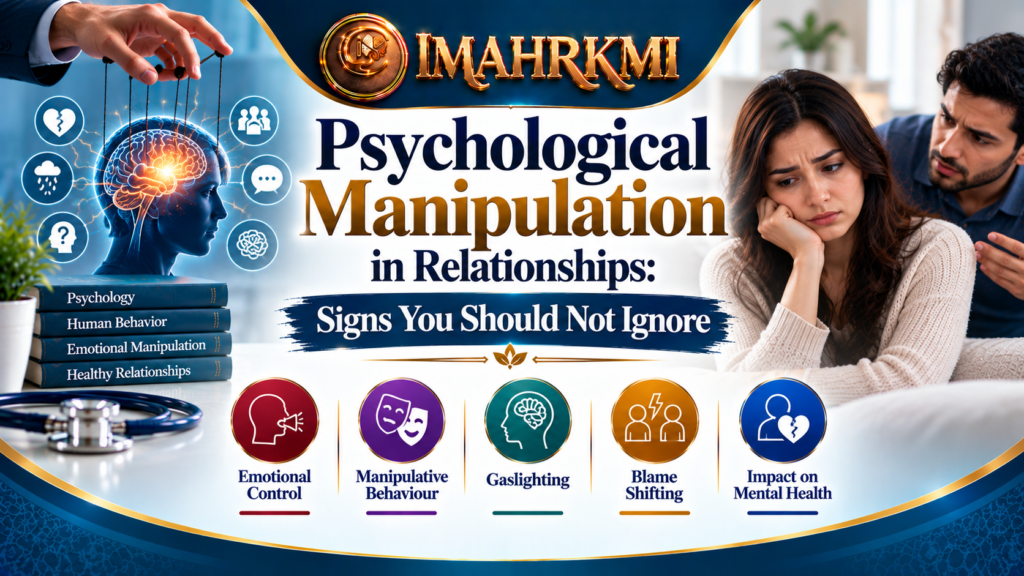
What Is Psychological Manipulation in a Relationship?
Psychological manipulation in a relationship is a pattern of influencing another person’s thoughts, emotions, decisions, or behavior through deceptive, coercive, or psychologically pressuring methods.
The important word is pattern.
One argument does not automatically mean a person is manipulative.
One emotional reaction does not establish psychological abuse.
One disagreement about a decision does not mean someone is attempting to control their partner.
A more concerning pattern may involve repeatedly using:
- guilt,
- fear,
- shame,
- confusion,
- emotional punishment,
- threats,
- excessive pressure,
- deception,
- or exploitation of vulnerabilities
to obtain compliance or maintain control.
Healthy Influence vs. Psychological Manipulation
It is normal for partners to influence one another.
For example:
Healthy influence:
“I would really like us to spend more time with my family this weekend. What do you think?”
The other person remains free to disagree.
A manipulative approach might be:
“If you loved me, you would cancel your plans and do what I want.”
The second statement introduces emotional pressure and questions the person’s love based on whether they comply.
Healthy relationships allow:
- disagreement,
- negotiation,
- independent decisions,
- boundaries,
- emotional expression,
- and mutual respect.
Manipulative relationships may gradually reduce these freedoms.
Why Is Manipulation So Powerful in Relationships?
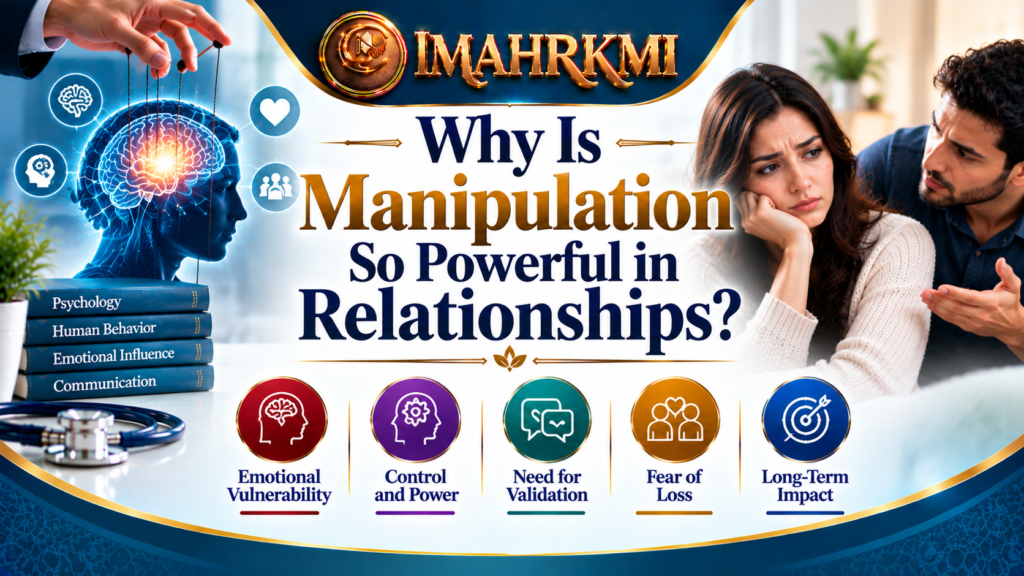
Romantic partners often know each other’s vulnerabilities.
They may know:
- what the other person fears,
- what makes them feel guilty,
- what they value,
- what they are insecure about,
- what they are afraid of losing,
- and how they respond to emotional pressure.
In a healthy relationship, this knowledge creates intimacy.
In an unhealthy relationship, the same knowledge can potentially become a psychological weapon.
For example, if someone knows their partner has a strong fear of abandonment, repeatedly threatening to leave whenever the partner disagrees may become a form of emotional pressure.
This is why manipulation can be particularly difficult to recognize when it occurs inside an intimate relationship.
12 Warning Signs of Psychological Manipulation in Relationships
1. Constant Guilt-Tripping
One common pattern is making a partner feel guilty whenever they express an independent need.
Examples may include:
- “After everything I’ve done for you…”
- “You don’t care about me.”
- “A good partner wouldn’t do this.”
- “I always sacrifice for you, but you never do anything for me.”
Expressing disappointment is normal.
Repeatedly using guilt to control a partner’s decisions is different.
2. Gaslighting
Gaslighting is frequently discussed as a form of psychological manipulation in which one person attempts to make another person question their memory, perception, or judgment.
A partner may repeatedly:
- deny conversations,
- deny events,
- contradict previous statements,
- dismiss concerns,
- or insist that the other person is imagining problems.
Over time, the targeted partner may become increasingly uncertain about their own perception.
Related article: Gaslighting: What It Is, How It Works, and How to Recognize It.
3. Emotional Blackmail
Emotional blackmail uses emotional pressure to influence another person’s behavior.
For example:
“If you don’t do this, our relationship is over.”
Repeated threats of abandonment can create fear and dependency.
A healthy relationship allows partners to discuss serious disagreements without constantly using relationship termination as a psychological weapon.
4. Excessive Jealousy and Possessiveness
Jealousy is a normal human emotion.
The problem arises when jealousy becomes a justification for controlling another person’s life.
Potential warning signs include attempts to control:
- friendships,
- social activities,
- clothing,
- communication,
- social media,
- work relationships,
- or contact with family members.
A partner may present control as evidence of love:
“I’m only controlling you because I love you.”
Love does not automatically justify removing another person’s reasonable independence.
5. Silent Treatment as Punishment
Taking time to calm down during conflict can be healthy.
Deliberately refusing communication to punish a partner or force compliance is different.
If silence repeatedly functions as:
Conflict → withdrawal → anxiety → partner gives in → communication resumes
it may become part of a controlling pattern.
6. Playing the Victim to Avoid Responsibility
A person raises a legitimate concern.
Instead of addressing it, the partner responds:
“I’m always the bad person.”
The conversation then shifts from the original behavior to comforting the person being confronted.
Healthy relationships require accountability from both partners.
7. Conditional Affection
Affection can become manipulative when it is repeatedly made conditional upon obedience.
Examples include:
- “I’ll only be affectionate if you do what I want.”
- “If you disagree with me, don’t expect anything from me.”
- “You don’t deserve my attention after what you did.”
Emotional closeness should not routinely become a reward system for controlling another person’s behavior.
8. Using Personal Vulnerabilities Against You
Partners often share sensitive information with each other.
That trust can become dangerous when personal vulnerabilities are repeatedly used to:
- humiliate,
- threaten,
- intimidate,
- shame,
- or control.
For example, using a partner’s past trauma, insecurity, family problems, financial difficulties, or personal mistakes as leverage can be psychologically harmful.
9. Constant Blame-Shifting
Healthy couples sometimes make mistakes and apologize.
Manipulative communication can involve a repeated pattern in which responsibility is almost always transferred to the other partner.
You raise an issue.
The response becomes:
“You made me do it.”
You raise another issue.
The response becomes:
“This is your fault too.”
Eventually, one partner may stop raising legitimate concerns simply to avoid conflict.
10. Isolation From Friends and Family
A particularly concerning pattern is gradually discouraging or preventing contact with supportive people.
Statements may include:
- “Your friends are bad for you.”
- “Your family doesn’t understand us.”
- “You only need me.”
- “They are trying to destroy our relationship.”
Not every concern about a friend or family member is manipulation.
However, repeated attempts to isolate someone from independent sources of emotional support deserve serious attention.
11. Threats and Intimidation
Manipulation becomes particularly serious when threats are involved.
These may include threats concerning:
- abandonment,
- finances,
- reputation,
- children,
- personal information,
- employment,
- or physical safety.
If someone is afraid of what will happen if they disagree, the situation requires more than ordinary relationship advice.
Safety should become a priority.
12. Making You Question Your Own Judgment
One of the most significant effects of long-term manipulation is loss of confidence.
You may begin asking:
- “Am I being unreasonable?”
- “Maybe I am the problem.”
- “Should I just agree?”
- “Maybe I cannot make decisions on my own.”
- “What if I lose this relationship?”
When a relationship repeatedly causes one person to distrust their own judgment, professional support may be useful.
Psychological Manipulation in Marriage
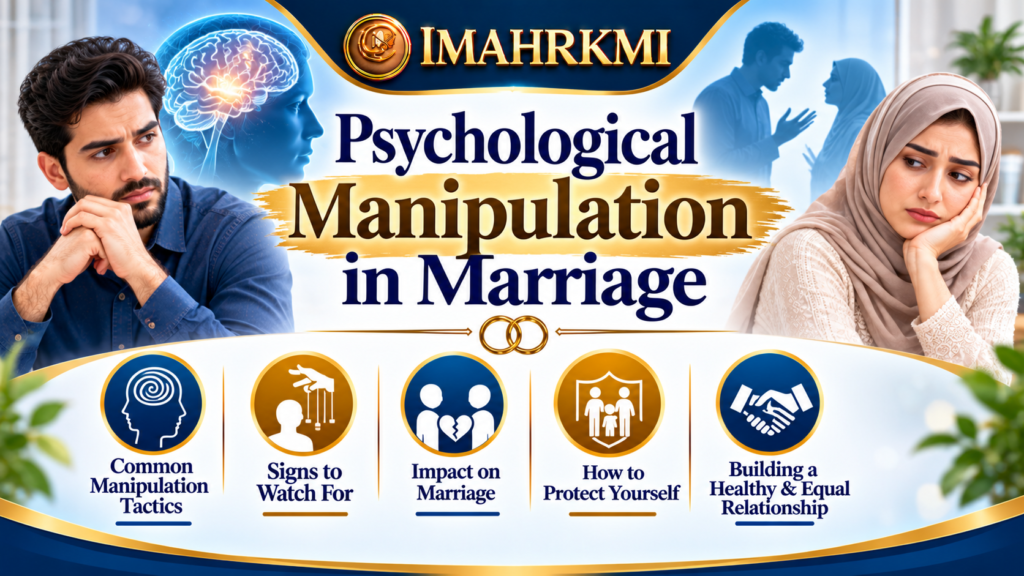
Marriage creates deep emotional interdependence.
Spouses naturally depend on each other for:
- companionship,
- emotional support,
- family decisions,
- financial planning,
- parenting,
- household responsibilities,
- and intimacy.
Healthy interdependence is not the same as unhealthy control.
Psychological manipulation may occur when one spouse repeatedly uses emotional pressure to control the other spouse’s:
- decisions,
- friendships,
- family relationships,
- finances,
- work,
- communication,
- personal boundaries,
- or emotional responses.
Marriage does not eliminate an individual’s need for dignity, autonomy, and psychological safety.
Psychological Manipulation and Sexual Relationships
Manipulation can also affect sexual and intimate relationships.
A partner may use:
- guilt,
- pressure,
- threats,
- emotional punishment,
- comparison,
- or fear of rejection
to influence the other person’s sexual decisions.
Healthy intimacy requires mutual willingness, communication, respect, and the ability to express concerns without fear.
A partner should not have to surrender personal boundaries because they are afraid of emotional retaliation.
This topic is particularly important because people sometimes confuse marital expectations with psychological pressure.
Professional relationship and sexual-health education can help couples distinguish between healthy communication, relationship expectations, consent, and coercive behavior.
Psychological Manipulation and Religion
Religion can be an important part of a person’s values and identity.
Unfortunately, religious language can sometimes be used improperly in interpersonal conflicts.
A person may use religious guilt or fear to pressure a spouse into doing something without allowing respectful discussion or consideration of individual circumstances.
This does not mean religion itself is manipulative.
Rather, religious concepts can be misused by individuals, just as money, family relationships, love, or social status can be misused.
For Muslims, questions about specific religious obligations or marital rulings should be discussed with qualified Islamic scholars who understand the relevant Qur’anic verses, authentic Hadith, and jurisprudential context.
Psychological manipulation should not be confused with legitimate religious guidance.
Why People Stay in Manipulative Relationships
One of the most misunderstood questions is:
“Why don’t they just leave?”
The answer is often complicated.
People may remain because of:
- love,
- children,
- financial dependence,
- fear,
- cultural expectations,
- religious concerns,
- social pressure,
- emotional attachment,
- hope that the relationship will improve,
- lack of support,
- low self-confidence,
- or gradual normalization of unhealthy behavior.
Manipulation can also develop slowly.
A relationship may not begin with obvious control.
Instead:
Trust → attachment → dependency → increasing pressure → reduced independence
can sometimes develop over time.
This gradual process can make the situation difficult to recognize.
Why Intelligent and Successful People Can Be Manipulated
Manipulation is not restricted to people who are uneducated or psychologically weak.
Highly educated, successful, financially independent, and professionally accomplished people can also experience manipulative relationships.
Emotional attachment can affect judgment.
So can:
- fear,
- loneliness,
- stress,
- grief,
- dependency,
- social pressure,
- and hope.
Intelligence does not make someone immune to emotional influence.
Psychological education is therefore relevant to everyone.
Psychological Effects of Relationship Manipulation
Repeated manipulation may contribute to:
Anxiety
The individual may constantly anticipate conflict.
Self-Doubt
They may stop trusting their own judgment.
Low Self-Esteem
Repeated criticism and humiliation can reduce confidence.
Emotional Exhaustion
Constantly managing another person’s reactions can become draining.
Confusion
Contradictory messages can make decision-making difficult.
Social Withdrawal
The individual may avoid discussing the relationship with others.
Dependency
The person may increasingly believe they cannot function without the relationship.
Depression or Other Psychological Distress
Persistent relationship stress can contribute to significant emotional symptoms in some individuals.
These effects vary and should not automatically be attributed to manipulation without considering other factors.
Psychological Manipulation vs. Normal Relationship Conflict
This distinction is critical.
Healthy relationships can involve:
- arguments,
- misunderstandings,
- jealousy,
- frustration,
- disappointment,
- defensiveness,
- and mistakes.
These experiences do not automatically mean psychological abuse.
A healthier conflict pattern may involve:
Problem → discussion → disagreement → reflection → accountability → compromise or respectful difference.
A manipulative pattern may repeatedly look more like:
Problem → denial → blame → guilt → confusion → pressure → compliance.
The pattern over time is more informative than one isolated argument.
How to Respond to Psychological Manipulation
1. Slow the Conversation Down
Manipulation often becomes more effective when someone feels pressured to make an immediate decision.
If appropriate, give yourself time to think.
You can say:
“I need time to think about this before making a decision.”
2. Focus on Behavior
Avoid trying to diagnose your partner during an argument.
Instead of:
“You’re a narcissist.”
focus on:
“I am not comfortable with being pressured to make this decision.”
This keeps the conversation focused on observable behavior.
3. Set Clear Boundaries
Healthy boundaries identify what you will and will not participate in.
For example:
“I am willing to discuss this respectfully. If the conversation becomes insulting, I will step away and return to it later.”
4. Maintain Supportive Relationships
Healthy relationships should not require complete isolation from friends and family.
Maintaining appropriate connections with trustworthy people can provide emotional support and independent perspective.
5. Keep Perspective
Do not allow one relationship to become your only source of emotional validation.
Healthy independence can strengthen psychological resilience.
6. Seek Professional Help
A qualified mental-health professional can help evaluate:
- relationship patterns,
- emotional distress,
- communication problems,
- boundaries,
- dependency,
- and safety concerns.
Professional support is especially valuable when you are unsure whether what you are experiencing is ordinary conflict or a repeated pattern of psychological manipulation.
What If Both Partners Are Manipulating Each Other?
Relationships are rarely completely simple.
Sometimes both partners use unhealthy communication strategies.
One partner may use guilt.
The other may respond with silent treatment.
One may threaten separation.
The other may retaliate with emotional withdrawal.
This can create a destructive cycle.
Instead of asking only:
“Who is the manipulator?”
it can sometimes be more useful to ask:
“What pattern has developed between us, and how can it change?”
When both partners are willing and it is safe to work together, couples therapy may help identify destructive communication cycles.
When Couples Therapy May Not Be the First Step
Couples therapy is not appropriate as the first intervention in every relationship.
If there is:
- serious intimidation,
- ongoing threats,
- physical violence,
- severe coercive control,
- fear of retaliation,
- or significant safety concerns,
individual professional support and safety planning may be more appropriate.
A qualified professional can help determine what type of intervention is safest.
How Psychological Education Can Protect Relationships
Psychological education is not only about identifying harmful people.
It can also help individuals understand their own behavior.
Learning about:
- emotional regulation,
- cognitive biases,
- attachment,
- communication,
- persuasion,
- influence,
- boundaries,
- psychological control,
- and interpersonal behavior
can help people recognize unhealthy patterns before they become deeply established.
It can also teach people how to communicate without relying on manipulation themselves.
The Role of Dark Psychology Education
The term Dark Psychology is widely used in popular education to describe topics related to manipulation, deception, persuasion, psychological influence, control, and human vulnerabilities.
It is not a formal psychiatric diagnosis or a single recognized branch of clinical psychology.
However, many subjects associated with the term can be studied through established psychological areas, including:
- social psychology,
- cognitive psychology,
- personality psychology,
- behavioral science,
- interpersonal psychology,
- communication,
- persuasion,
- and decision-making.
Studying these concepts responsibly should emphasize recognition, awareness, critical thinking, ethical boundaries, and self-protection.
The purpose should never be to exploit a partner’s vulnerabilities.
Frequently Asked Questions
What is psychological manipulation in a relationship?
It is a repeated pattern of using psychological pressure, deception, emotional influence, or coercive communication to unfairly influence a partner’s thoughts, feelings, decisions, or behavior.
What are the biggest signs of a manipulative partner?
Common warning signs may include repeated guilt-tripping, gaslighting, emotional blackmail, excessive control, intimidation, isolation, blame-shifting, conditional affection, and deliberate use of personal vulnerabilities.
Is every controlling behavior manipulation?
Not necessarily. Context matters. A single disagreement or request does not establish a manipulative pattern. Repeated attempts to restrict another person’s reasonable autonomy are more concerning.
Can manipulation happen in a healthy relationship?
Healthy relationships can contain occasional unhealthy behaviors. What matters is whether the behavior becomes a repeated pattern and whether partners are willing to recognize and change it.
Is gaslighting the same as psychological manipulation?
Gaslighting is commonly considered a specific form of psychological manipulation involving attempts to undermine someone’s confidence in their memory, perception, or judgment.
Can psychological manipulation happen in marriage?
Yes. Marriage does not make people immune to unhealthy psychological influence.
Can a manipulative relationship be repaired?
Some relationships can improve when unhealthy patterns are recognized and both partners are willing to make meaningful changes. The appropriate approach depends on the severity and nature of the behavior and whether the relationship is safe.
Should I immediately leave if I recognize manipulation?
There is no universal answer. The appropriate decision depends on the circumstances, including safety, severity, dependency, children, finances, available support, and willingness to change. If there are threats or violence, prioritize safety and appropriate professional support.
Final Thoughts
Psychological manipulation in relationships can be difficult to recognize because it often develops through ordinary human emotions such as love, fear, guilt, jealousy, attachment, and the desire to maintain a relationship.
The presence of conflict does not automatically mean manipulation.
The presence of strong emotions does not automatically mean abuse.
The important question is whether there is a repeated pattern of psychological pressure that undermines another person’s autonomy, confidence, boundaries, or ability to make independent decisions.
Learning about these patterns can help people become more psychologically aware without becoming suspicious of every disagreement.
Healthy relationships do not require perfect agreement.
They require the ability to disagree while maintaining:
respect, dignity, communication, accountability, boundaries, and psychological safety.
Learn More About Psychological Manipulation and Human Behavior
If you want to study psychological manipulation beyond relationship examples, IMAHRKMI’s Dark Psychology Online Certificate/Diploma Program provides a broader educational framework for understanding topics related to:
- Psychological manipulation
- Emotional influence
- Gaslighting
- Cognitive biases
- Persuasion
- Psychological control
- Human behavior
- Vulnerability
- Deception
- Social influence
- Emotional pressure
- Ethical psychological awareness
The program is intended to provide structured education about psychological and behavioral concepts. The goal is to understand how manipulation and influence work, recognize unhealthy patterns, develop critical thinking, and improve awareness of psychological vulnerabilities.
Explore the IMAHRKMI Dark Psychology Online Certificate/Diploma Program to continue studying these topics in a structured educational format.
About the Author
Dr. Inayat Ullah, M.D.
Board-Certified Psychiatrist
AASECT-Certified Sex Therapist
Sexologist & Mental Health Specialist
Relationship & Couple Therapy Specialist
Director, IMAHRKMI
New York, USA