
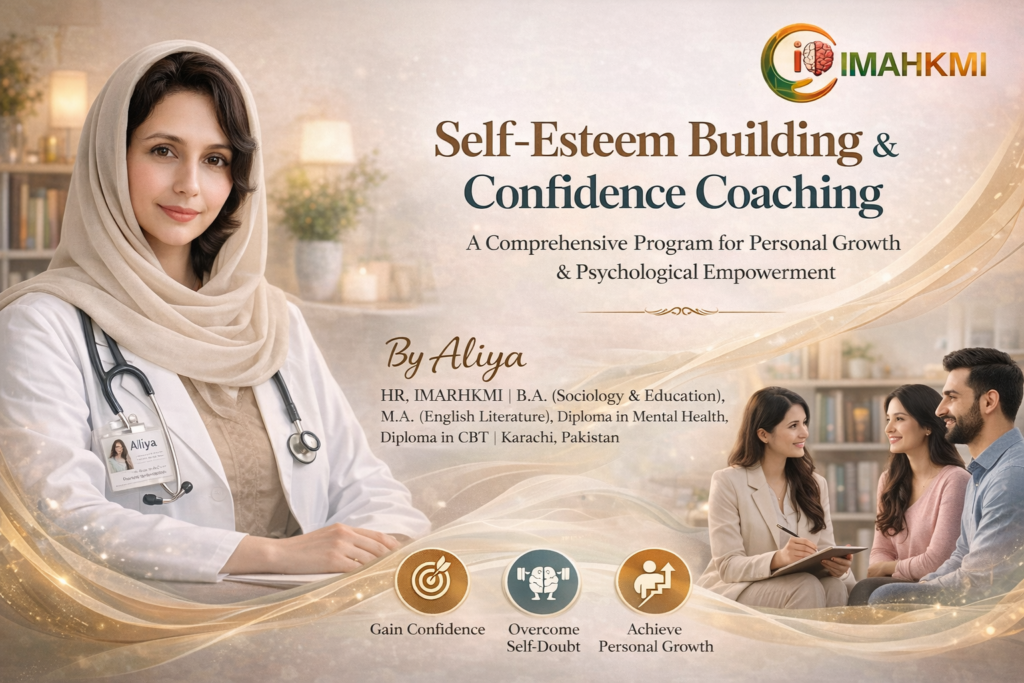
Self-Esteem Building & Confidence Coaching: A Comprehensive Program for Personal Growth and Psychological Empowerment
In today’s fast-paced, achievement-oriented society, individuals are constantly evaluated based on performance, appearance, and social standing. This continuous pressure often leads to self-doubt, comparison, and internal criticism, resulting in low self-esteem and lack of confidence. Many individuals possess the skills and potential necessary for success but remain unable to utilize them effectively due to deeply rooted psychological barriers.
Self-esteem and confidence are foundational components of mental well-being and personal success. They influence how individuals perceive themselves, interact with others, make decisions, and respond to challenges. When self-esteem is low, individuals may avoid opportunities, fear failure, and depend heavily on external validation. In contrast, healthy self-esteem fosters resilience, independence, and a positive outlook on life.
The Self-Esteem Building & Confidence Coaching course, conducted under IMARHKMI via Google Meet, is a structured two-week program designed to help participants understand the psychological roots of low self-esteem, challenge negative thinking patterns, and develop a confident and empowered self-identity through evidence-based techniques and guided practice.
Understanding Self-Esteem and Confidence in Depth
Self-esteem is a multidimensional concept that reflects an individual’s overall evaluation of their worth. It is shaped by early life experiences, social interactions, cultural expectations, and personal achievements. Confidence, on the other hand, refers to the belief in one’s ability to perform tasks and handle situations effectively.
Low self-esteem is often associated with:
- Persistent self-doubt
- Fear of criticism or rejection
- Negative self-talk
- Perfectionism
- Avoidance of challenges
- Difficulty asserting oneself
These patterns are not random; they are learned responses developed over time. Negative experiences such as criticism, failure, comparison, or lack of support can create deeply ingrained beliefs such as “I am not good enough” or “I will fail.” These beliefs influence behavior and reinforce low confidence.
This course focuses on identifying and restructuring these beliefs to create healthier and more empowering thought patterns.
Course Objectives
The course is designed with the following objectives:
- To help participants develop a clear understanding of self-esteem and its psychological foundations
- To identify and challenge negative core beliefs and cognitive distortions
- To enhance emotional awareness and self-acceptance
- To build confidence in communication, decision-making, and social interaction
- To provide practical tools for overcoming fear, self-doubt, and procrastination
- To support long-term personal development and resilience
Course Methodology and Delivery Approach
This course follows a practical, interactive, and evidence-based approach, ensuring that participants not only learn concepts but also apply them in real-life situations.
- Live Interactive Sessions (Google Meet)
Each session is conducted live, allowing participants to engage directly with the instructor. These sessions include:
- Concept explanation
- Real-life examples
- Group discussions
- Question and answer segments
- Guided Self-Reflection Exercises
Participants are encouraged to explore their thoughts, beliefs, and emotional patterns through structured reflection exercises. These activities help in increasing self-awareness, which is the first step toward change.
- Cognitive Behavioral Techniques (CBT-Based)
The course integrates CBT techniques to help participants:
- Identify negative automatic thoughts
- Challenge irrational beliefs
- Replace them with balanced and realistic thinking
- Practical Assignments and Worksheets
Participants receive structured worksheets that include:
- Thought records
- Self-esteem assessments
- Confidence-building tasks
- Goal-setting exercises
- Behavioral Practice and Real-Life Application
Participants are guided to apply learned techniques in their daily lives, such as practicing assertive communication, taking small risks, and stepping out of their comfort zones.
- Supportive Learning Environment
The course encourages a safe and respectful environment where participants can share experiences and learn collaboratively, enhancing both understanding and motivation.
Course Structure (Detailed 2-Week Plan)
Week 1: Awareness, Understanding, and Cognitive Foundation
Day 1: Introduction to Self-Esteem and Confidence
Understanding the difference between self-esteem and confidence and their impact on life outcomes.
Day 2: Identifying Negative Core Beliefs
Exploring deeply held beliefs about self-worth and their origins.
Day 3: The Role of Past Experiences
Analyzing how childhood experiences, social influences, and past failures shape self-perception.
Day 4: Understanding the Inner Critic
Identifying self-critical thoughts and learning how they affect emotions and behavior.
Day 5: Emotional Awareness and Regulation
Recognizing emotional responses and learning basic techniques to manage them.
Day 6: Cognitive Restructuring Techniques
Learning how to challenge and replace negative thoughts using structured methods.
Day 7: Weekly Review and Integration
Reflection, discussion, and guided practice to reinforce learning.
Week 2: Confidence Building and Skill Development
Day 8: Developing Self-Acceptance
Learning to accept strengths and weaknesses without harsh judgment.
Day 9: Building a Positive Self-Image
Creating a healthier perception of self through intentional thinking and behavior.
Day 10: Communication Skills and Assertiveness Training
Learning how to express thoughts, needs, and boundaries clearly and respectfully.
Day 11: Overcoming Fear and Self-Doubt
Understanding fear responses and applying techniques to manage them.
Day 12: Goal Setting and Personal Growth Planning
Using structured goal-setting methods to create achievable plans.
Day 13: Confidence in Action (Behavioral Practice)
Applying skills in real-life situations to build confidence through experience.
Day 14: Final Reflection and Long-Term Strategy
Developing a sustainable plan for maintaining self-esteem and confidence.
Key Techniques and Tools Used
Participants will learn and practice:
- Cognitive Behavioral Therapy (CBT) techniques
- Positive affirmations and self-talk
- Thought challenging and reframing
- Journaling and reflection
- Behavioral activation
- Exposure to confidence-building situations
- Goal-setting frameworks
Benefits of the Course
Psychological Benefits
- Improved self-esteem and self-worth
- Reduction in negative thinking patterns
- Better emotional regulation
Personal Development Benefits
- Increased confidence in daily interactions
- Improved decision-making ability
- Greater self-awareness and clarity
Professional Benefits
- Enhanced communication skills
- Increased confidence in academic and workplace environments
- Better performance under pressure
Who Should Join
This course is ideal for:
- Students struggling with confidence issues
- Individuals experiencing low self-esteem
- Professionals seeking personal growth
- Individuals facing fear of failure or social anxiety
- Anyone looking to improve their mindset and emotional well-being
Expected Outcomes
By the end of the course, participants will:
- Develop a stronger and healthier sense of self
- Gain confidence in expressing thoughts and making decisions
- Learn to manage self-doubt and negative thinking
- Build resilience against criticism and setbacks
- Create a long-term plan for continuous personal development
Conclusion
Self-esteem and confidence are not fixed traits; they are skills that can be developed through awareness, practice, and consistency. Many individuals remain limited not because of lack of ability, but because of internal barriers that prevent them from recognizing their true potential.
The Self-Esteem Building & Confidence Coaching course provides a structured and supportive pathway to break these barriers, develop a positive self-image, and build lasting confidence.
Through guided learning, practical exercises, and continuous self-reflection, participants can transform their mindset, strengthen their identity, and move forward with clarity, confidence, and purpose.